
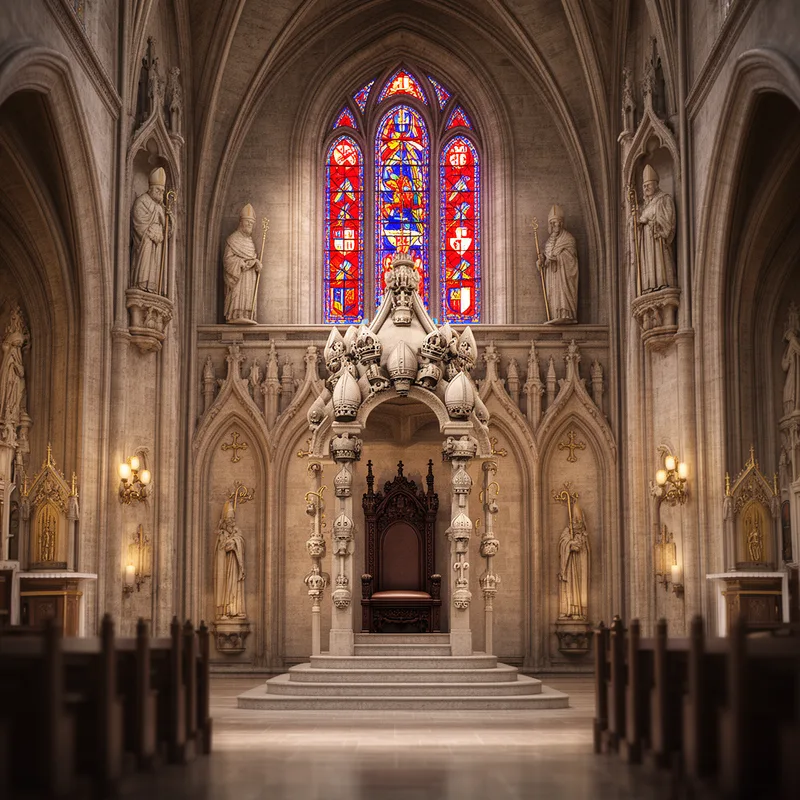
prelatical architecture
- noun
- /ˌprɛlətɪkəl ˈɑrkɪtɛkʧər/
- Formal
- Many historians trace the development of prelatical architecture to the influence of powerful bishops in medieval Europe.
Examples
-
The old abbey displayed remarkable prelatical architecture with its elaborate arches and grand towers.
-
Many visitors admire the prelatical architecture of St. Peter's Basilica.
-
She studied the symbolic designs often found in prelatical architecture during her university course.
-
The cathedral showcases stunning prelatical architecture.
-
The cathedral showcases stunning prelatical architecture, characterized by its majestic spires and intricate stonework.
-
Many visitors admire the prelatical architecture of St. Peter's Basilica, noting its grand scale and detailed artistry.
-
The old abbey displayed remarkable prelatical architecture with its elaborate arches and grand towers, reflecting the power of the church.
How Prelatical


Surface Forms
Morphology
prelatical + architecture
The adjective 'prelatical' is a regular derivation from 'prelate' (a church bishop or senior cleric) + -ical and simply modifies 'architecture', so a learner who knows 'prelate' and 'architecture' can infer it means architecture associated with bishops or church leaders. This is a compositional, literal formation following common adjective+noun patterns (and parallels in other languages), making the meaning predictable rather than idiomatic.
Etymology
Prelatical architecture comes from the word prelate, a senior church leader like a 'bishop'. Powerful prelates often paid for grand churches with tall towers and fancy decoration, so the term now means the style of church buildings linked to bishops or 'church leaders'.