
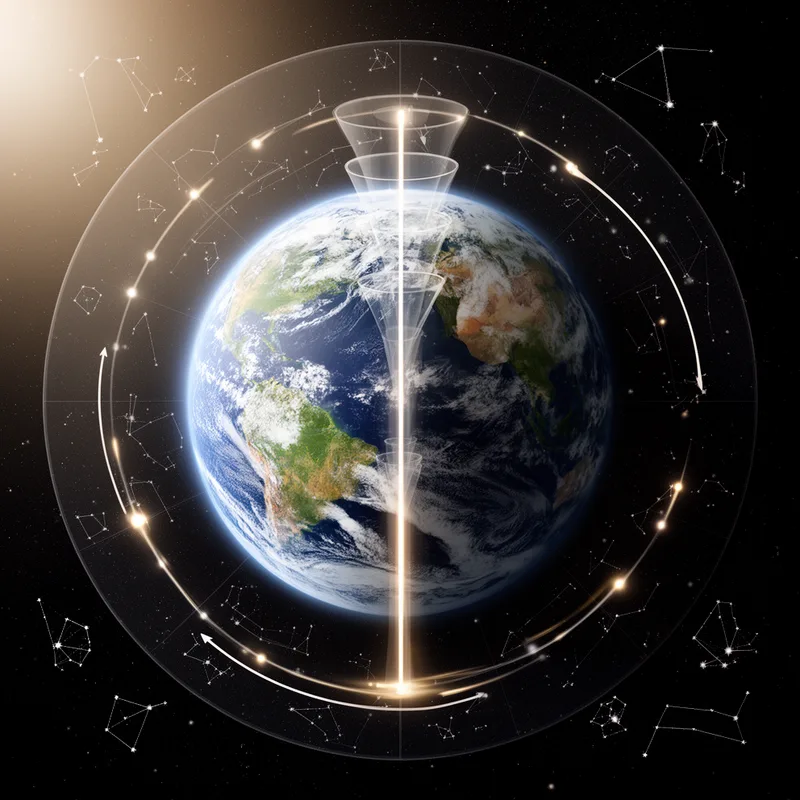
precession of the equinoxes


 1
9.9
- noun
- /prɪˈsɛʃən əv ði ˌiːkwɪˈnɒksɪz/
- Specialized
- The precession of the equinoxes affects how we perceive the changing seasons over time.
Examples
-
Astronomers study the precession of the equinoxes to understand long-term climate changes on Earth.
-
The concept of the precession of the equinoxes helps explain why the position of stars slowly changes in the night sky.
-
And that would allow one to calculate the precession of the equinoxes and a whole range of other variables that matter.
-
The Mayan calendar takes the precession of the equinoxes into account.
Academic text (2000) -
The precession of the equinoxes occurs because of the wobble of the spinning Earth.
Academic text (2000) -
It ends on 21 December 2012 C.E. (n5), a crucial date within the cycle of the precession of the equinoxes.
Academic text (2000)
Synonyms
 3
9.6
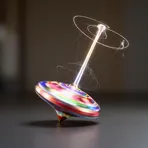
A slow circular movement of the line through the middle of a spinning object, like a top or a planet
Surface Forms
Morphology
precession + of + the + equinox
The noun phrase is compositionally built: 'precession' denotes a gradual change in orientation of a spinning axis and 'equinoxes' denotes the twice-yearly points of equal day and night, so together they describe the gradual movement/change of the equinoxes. Although the concept is technical and a learner might not grasp details like the westward direction or astronomical cause without background, the core meaning is directly derivable from the constituents and is cross-linguistically transparent.
Etymology
Precession of the equinoxes comes from the image of a spinning top that slowly 'wobbles' as it turns: the Earth's axis makes a slow circle, so the points when day and night are equal—the equinoxes—move across the stars. So, the phrase means the slow movement of those 'equal day and night' points along the sky over many years.