
precession
 3
9.6

- noun
- /prɪˈsɛʃən/
- Specialized
- We have the obliquity of the orbit, we have the precession of the axis of the Earth, and we have the degree of tilt.
- precession frequency
- precession of the equinoxes
- precession rate
Loading YouTube…
Watch on YouTubeIt's allowed by Einstein's gravity theory and what in fact the precession of Mercury was measured.
- It's allowed by Einstein's gravity theory and what in fact the precession of Mercury was measured.
- There's a phenomenon called Thomas precession that affects this result.
- They're supposed to have been the the discoverers of precession.
Examples
-
The amount of time that it takes for the precession to go through all 12 signs is roughly 25,765 years.
-
The Mayan calendar takes the precession of the equinoxes into account.
Academic text (2000) -
In order to understand this, we need to be familiar with the phenomenon known as the Precession of the Equinoxes.
-
There's a phenomenon called Thomas precession that affects this result.
-
And that would allow one to calculate the precession of the equinoxes and a whole range of other variables that matter.
-
The precession of the equinoxes occurs because of the wobble of the spinning Earth.
Academic text (2000) -
And then there's the wobbling of the earth's axis, right? That causes the precession of the equinoxes.
Fiction book (1995) -
During medieval times, Arab astronomers used old observations to calculate a better value for the precession and obliquity of the ecliptic.
Academic text (1996) -
The Stanford-Lockheed-NASA Gyroscope Experiment, called Gravity Probe B, will measure the precession of an array of gyroscopes in Earth orbit.
Academic text (1999) -
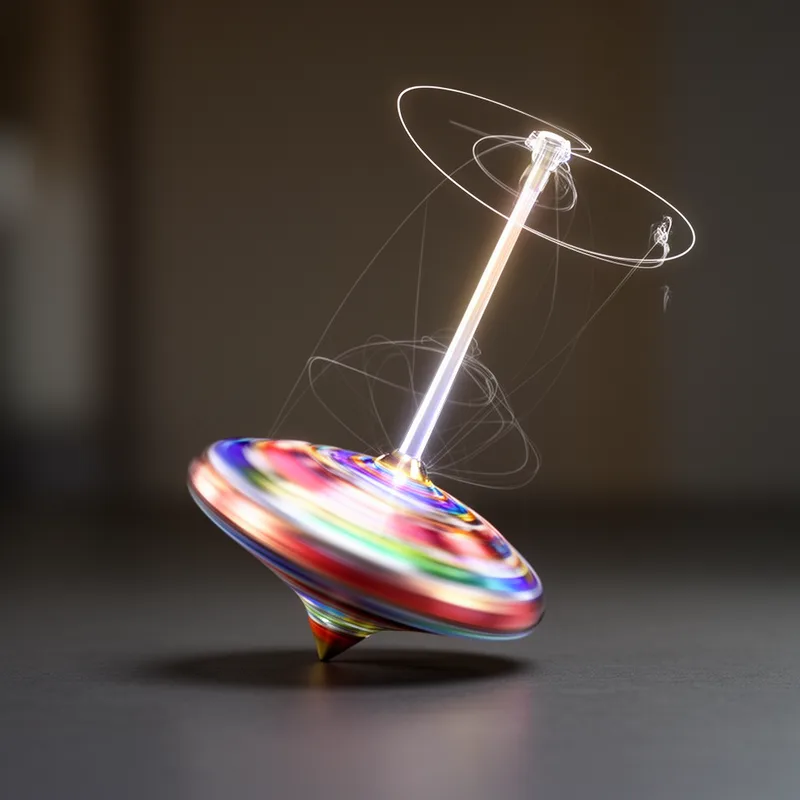
You can see an example of precession every time you spin a top.
Antonyms


Compounds

- Specialized

 1
9.9
Slow change in Earth's axis over thousands of years that moves the equinoxes among the stars
Surface Forms
Morphology
Etymology
Precession comes from parts meaning pre- 'before' and -cess- 'to go', the same root you see in precede. So in physics precession is the slow 'going' or movement of a spinning object's axis around another direction, and the name highlights that slow, forward motion.