

prairie grass
 1
3.5
1
3.5

- noun
- /ˈprɛəriˌɡræs/
- US
- A single path cuts through the scrub and prairie grass, disappearing into the nearby woods.
- native prairie grasses
Examples
-
"I gazed past Bob out of the window, out over the prairie grass rippling in the wind.
Fiction book (2001) -
And it's just the kind of place we prairie chickens like—lots of prairie grass where we can hide our nests and raise our chicks.
Fiction book (1999) -
Medicine Wolf lay down in the soft prairie grass, holding Wolf close and pulling the blanket over them.
Fiction book (1992) -
Finally, she saw it, a light-colored form against the darker prairie grass.
Fiction book (1992) -
Elaine took my hand, and we sat down in the thick prairie grass.
Fiction book (2002) -
The smoke had cleared, and they all nestled into the prairie grass and fell asleep under the big, bright stars.
Fiction book (1999) -
The roofs were covered with bundles of prairie grass.
Academic text (2010) -
In much of Texas, mesquite has replaced the native prairie grasses.
Academic text (1997) -
The roots and seeds of prairie grass survive the controlled burnings, as do many prairie animals.
Academic text (1993) -
The yard is a wild tangle of prairie grass and wildflowers.
Synonyms
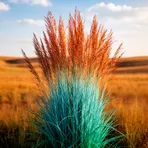
A hardy North American prairie grass with blue-green stems and leaves that turn bronze in autumn, also called little bluestem

A tough North American grass often called little bluestem with leaves that turn pale bronze in autumn
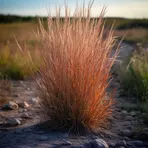
A hardy North American grass that has stiff stems and pale brown leaves in autumn
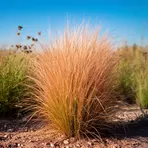
A tough grass from North America with leaves that turn pale bronze in autumn
How Hardy


Surface Forms
Morphology
The noun compound 'prairie grass' is directly compositional: a B1 learner who knows 'prairie' (treeless grassland) and 'grass' (grassy plants) will readily infer it means the grass that grows on prairies. This follows a common English noun+noun pattern and is cross-linguistically transparent and predictable.
Etymology
Prairie grass comes from the simple picture of prairie, meaning 'a wide, open plain', and grass, meaning 'low plants that grow there'. Imagine fields of these low blades waving in the wind and turning pale bronze in autumn; that image is why the name means 'a hardy, attractive North American grass'.