
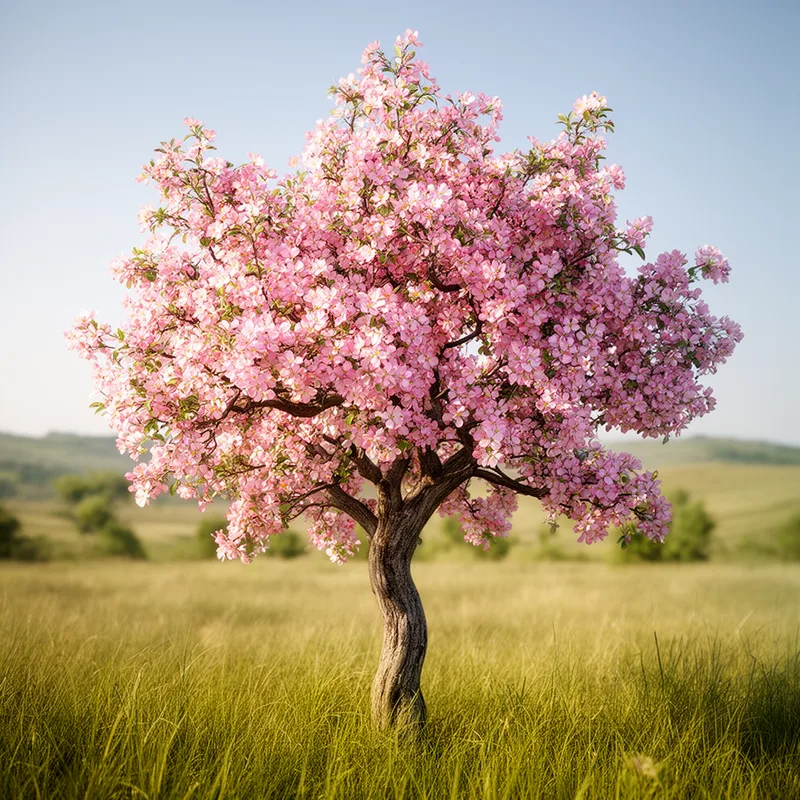
prairie crab
- noun
- /ˈprɛəri kræb/
- US
- The prairie crab tree blooms with fragrant pink flowers every spring, attracting many pollinators.
Examples
-
The prairie crab adds a splash of pink to the grasslands each spring.
-
We planted a prairie crab in our garden for its beautiful flowers.
-
Botanists study the prairie crab for its resilience in harsh climates.
-
Look at the prairie crab!
-
The prairie crab tree blooms beautifully in spring.
-
In the western United States, the prairie crab is celebrated for its stunning blossoms and hardiness.
-
Gardening enthusiasts often choose the prairie crab for its vivid flowers and resilience to drought.
Synonyms

A wild crab apple tree from the western United States with fragrant pink flowers

A wild small apple tree with sweet-smelling pink flowers
A small wild apple tree that grows in the western United States and has fragrant pink flowers
Surface Forms
Morphology
A B1 learner who knows 'prairie' (grassland) and 'crab' (the crustacean) would not reliably infer 'wild crab apple tree' from 'prairie crab' because 'crab' here is part of the lexicalized compound 'crab apple' rather than the animal. The botanical sense is unpredictable from the literal constituents and may mislead learners to think of an animal, so prior lexical knowledge of 'crab apple' is required.
Etymology
The noun prairie crab may come from two simple images: prairie, the open grassland where the tree grows, and crab, short for the small tart 'crab apple' fruit it makes. So the name paints the picture of a small wild 'apple' tree with pink flowers on the prairie, and that is why the term refers to that tree today.

