
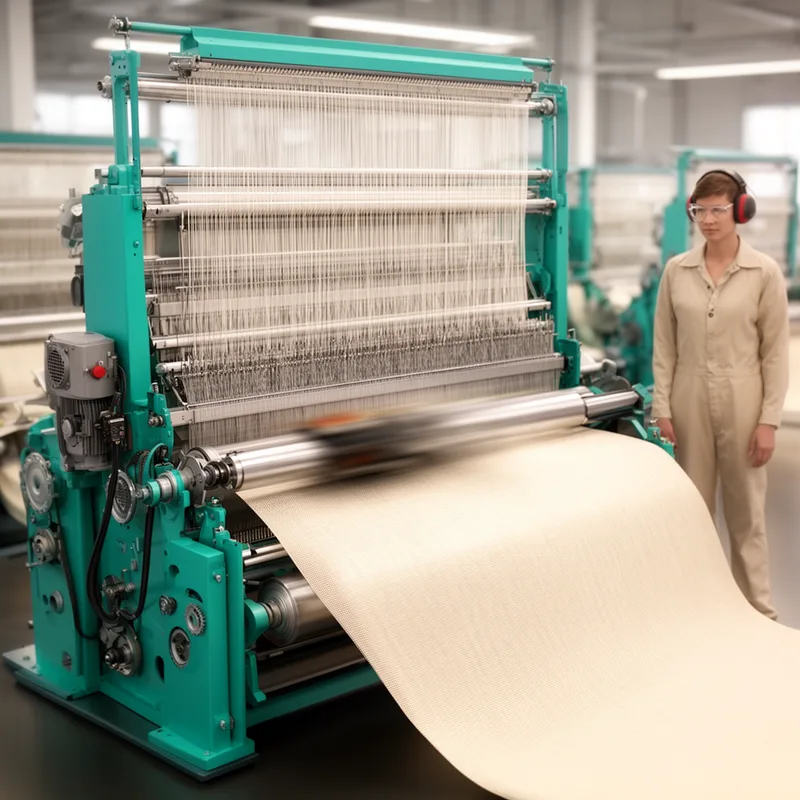
power loom


 1
5.1
1
5.1
- noun
- /ˈpaʊər luːm/
- Specialized
- For example, the manufacture of cloth or textiles had been a major endeavor for thousands of years but changed little until the invention of the spinning jenny, power loom, and flying shuttle.
Examples
-
She's interested in having a power loom.
Fiction book (1991) -
The spread of automatic mules and power looms did not occur on a large scale in woolen mills until the 1850s and 1860s.
Academic text (1993) -
She had bought that wooden flying shuttle, after all, and though she had read about millworkers in college -- the long hours, the accidents, the racket of the power looms -- how much did she really think about it?
Fiction book (1995) -
During the factory tour, visitors can see how a power loom weaves fabric automatically.
-
In the 19th century, the introduction of the power loom transformed the textile industry by increasing production speed.
-
Many artisans were replaced by power looms, which allowed for cheaper and faster cloth manufacturing.
Synonyms
 20
3.9
20
3.9
A machine that weaves yarn into cloth
How Automated
- Specialized
1
5.1

- Specialized
Surface Forms
Morphology
The meaning 'a loom operated by mechanical power' is directly and transparently derived from combining 'power' (energy) with 'loom' (weaving device); the compound simply specifies the loom's power source. This straightforward compounding pattern is cross-linguistically common and follows regular English morphology, so a B1 learner who knows both constituents can readily infer the meaning.
Etymology
Power loom comes from a simple image: a loom, a frame for weaving, driven by power such as water, steam, or electricity. So the term means a machine that weaves cloth using energy instead of 'by hand'.