
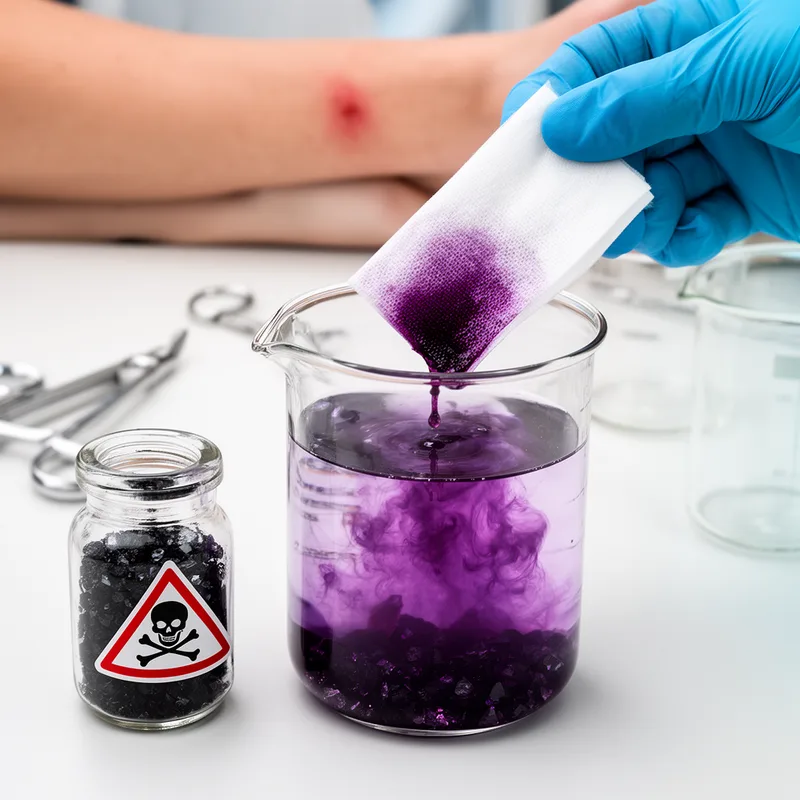
potassium permanganate
- noun
- /pəˈtæsiəm pərˈmæŋɡəneɪt/
- Specialized
- The solution contained potassium permanganate for disinfection.
Examples
-
When potassium permanganate dissolves in water, it produces a deep purple solution.
-
The laboratory kept a stock of potassium permanganate for chemical experiments.
-
Doctors sometimes use potassium permanganate to treat certain skin conditions.
-
Can you buy potassium permanganate from the chemical supply store?
-
Using potassium permanganate as a disinfectant can help prevent infections when cleaning wounds.
-
In laboratories, potassium permanganate is commonly used as an oxidizing agent for various chemical reactions.
-
The gardener carefully mixed potassium permanganate with water to disinfect the soil before planting.
Synonyms
 2
9.9
2
9.9

A dark purple chemical that kills germs on skin and in water

A poisonous purple salt used as a bleach and to kill germs
Surface Forms
Morphology
The term denotes a chemical compound composed of the element potassium and the permanganate ion, so its meaning (a purple oxidizing/disinfectant substance) follows directly from combining the constituent meanings. Chemical nomenclature is compositional and similar across languages, so a B1 learner who knows both constituents would reasonably infer the MWE's meaning.
Etymology
The name potassium permanganate comes from two parts: potassium, a word linked to 'potash', the ash left after burning plants, and permanganate, the part that shows it has the metal manganese and gives the deep purple crystals. Those strong purple crystals can kill germs and can be poisonous, so they are used as a disinfectant and antiseptic.