
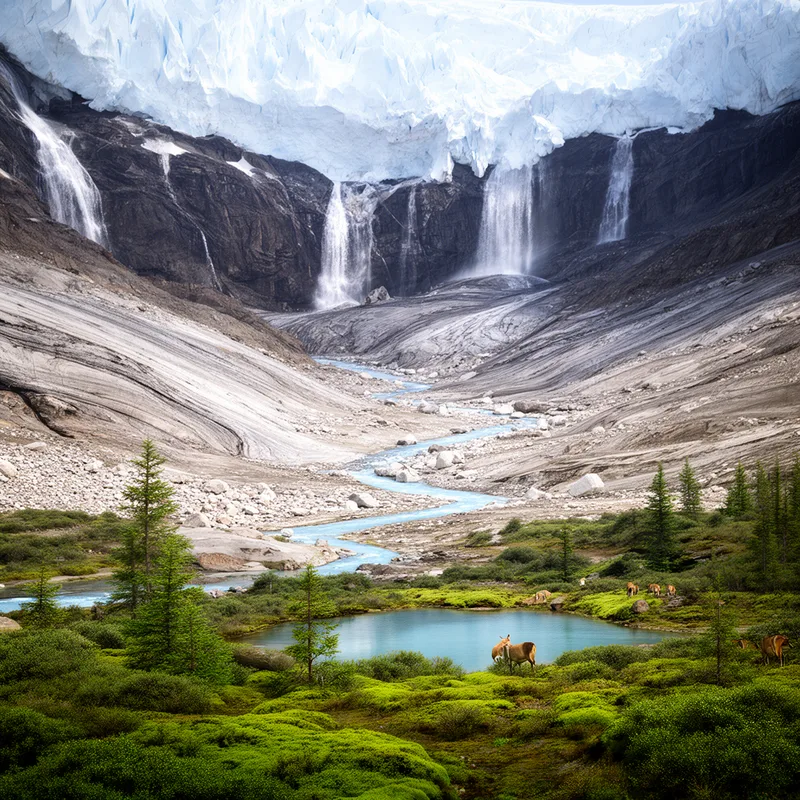
postglacial
- adjective
- /ˌpoʊstˈɡleɪʃəl/
- Specialized
- During the postglacial period, many species adapted to the warmer climate that followed the glaciers.
Examples
-
The postglacial landscape reveals evidence of how the earth transformed after the last Ice Age.
-
"It is a great opportunity to test our theory, to see if our model can be generalized outside of the postglacial area," says Costopoulos.
Academic text (2010) -
For example, changing outflow gradient associated with glacial and postglacial events explains the presence of fish in lakes that presently have a high outflow gradient.
Academic text (1999) -
It is probable that most early coastal sites were inundated long ago by rising postglacial sea levels, but if any can be found, they will help track and date the migrations of early modern humans around the northern shores of the Indian Ocean.
Academic text (2002) -
However, local distribution of fishes is determined by geomorphic barriers established by glacial history and postglacial geological processes that established extant lake and river basins (Hamilton 1982, 1986).
Academic text (1999) -
Scientists study postglacial environments to understand the ecological changes that took place after the glaciers retreated.
Synonyms

 3
7.7
3
7.7

Happening during a warm period between ice ages when glaciers shrink
Surface Forms
Morphology
Etymology
Postglacial comes from the prefix post- meaning 'after' and the word glacier (large, slow rivers of ice) meaning 'ice'. So postglacial describes the time or changes that happen 'after the ice', for example the period after the last Ice Age.