
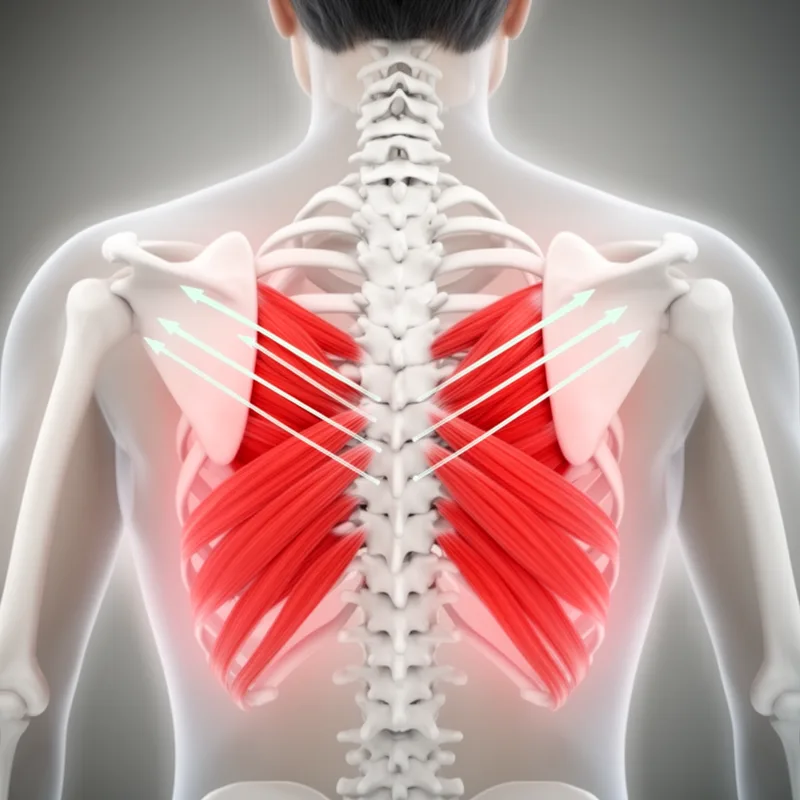
posterior serratus muscle
- noun
- /ˌpoʊstɪˈɒrɪər səˈreɪtəs ˈmʌsəl/
- Specialized
- In anatomy classes, students learn how the posterior serratus muscle aids in pulling the rib cage downward.
Examples
-
Injuries to the posterior serratus muscle can affect proper movement of the rib cage.
-
Physical therapists may target the posterior serratus muscle during rehabilitation exercises for upper back pain.
-
The posterior serratus muscle helps in expanding the chest during deep breathing.
-
The posterior serratus muscle helps in breathing.
-
Many athletes strengthen their posterior serratus muscles during training.
-
When the posterior serratus muscle is strong, it contributes to efficient rib cage movement during inhalation.
-
Rehabilitation exercises often involve stretching the posterior serratus muscle to improve back flexibility.
Synonyms

A muscle in the upper back that helps move the ribs when you breathe

A back muscle that pulls the ribs down and back
Surface Forms
Morphology
The term is fully compositional: 'posterior' (rear) modifies 'serratus muscle' (a saw‑toothed muscle), so it denotes the serratus muscle located at the back that acts on the ribs. Anatomical naming is descriptive and parallels patterns in other languages, so a B1 learner who knows the constituent words can infer the meaning.
Etymology
Posterior serratus muscle: The name posterior serratus muscle comes from its shape and place in the body: posterior means 'back' and serratus means 'saw-like' because its edge has many tooth-like parts. It sits along the ribs and pulls them back and down, so the name helps you remember that it moves the rib cage backward and downward.

