

pond lily
- noun
- /pɒnd ˈlɪli/
- The garden's centerpiece is a cluster of white pond lilies floating on the water.
Examples
-
Dragonflies hovered above the pond lily, drawn by its brilliant color.
-
The pond lily bloomed beautifully in the summer.
-
A magnificent pond lily bloomed at the edge of the quiet lake.
-
I saw a pond lily while walking by the lake.
-
The pond lily blooms beautifully in the summer sun, attracting many bees and butterflies.
-
We enjoyed a peaceful afternoon by the pond, where the vibrant pond lilies floated gracefully on the water.
-
The garden's centerpiece was a stunning display of pond lilies, filling the air with their sweet fragrance.
Synonyms

 4
1.9
4
1.9

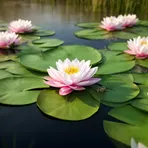
A plant that floats on water with large round leaves and pretty white, pink, or yellow flowers
 1
3.0
1
3.0
A plant that grows in water with large flat leaves and big flowers on the surface

A water plant with big floating leaves and sweet smelling flowers

A water plant with large floating leaves and fragrant white flowers

A water plant with broad floating leaves and round yellow flowers that grows in quiet ponds

A water plant with broad leaves and round yellow flowers that floats on calm water

A plant with yellow flowers that grows in ponds and slow-moving water

A water plant with large white flowers that float on ponds
Surface Forms
Morphology
The meaning — a lily that grows in or is associated with a pond — is directly and transparently derivable from combining 'pond' (a small body of water) with 'lily' (a flowering plant). This simple noun-noun compositional pattern is common cross-linguistically and follows standard English compound formation, so a B1 learner who knows both constituents would readily infer the MWE's meaning.
Etymology
The compound noun pond lily names a lily that grows in a pond; picture a bright flower sitting on a round green leaf that floats on the water. So, 'pond lily' means the water plant with floating leaves and showy flowers.