
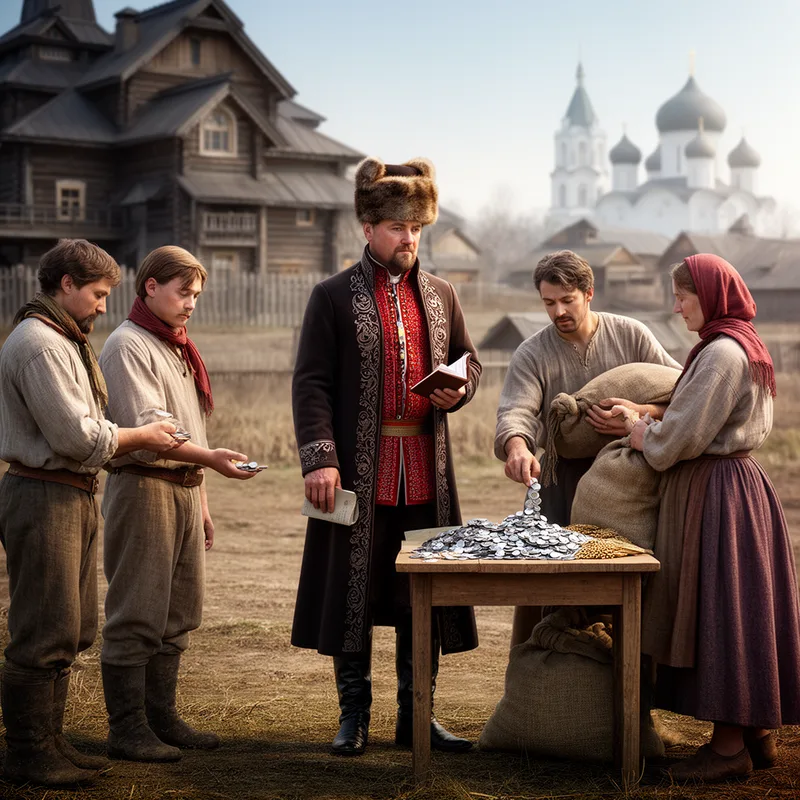
pomeshchik


 1
9.9
- noun
- Archaic
- During the reforms, many pomeshchiks lost their estates and privileges.
Examples
-
The pomeshchik managed several villages and collected taxes from the peasants.
-
The pomeshchik oversaw the entire estate.
-
As a pomeshchik, he was responsible for providing soldiers to the tsar.
-
Many pomeshchiki were known for their wealth.
-
The pomeshchik ensured that the peasants worked diligently on his estate.
-
As a wealthy pomeshchik, he collected taxes from the hardworking villagers.
-
Many pomeshchiki played a crucial role in managing agricultural production in historical Russia.
Surface Forms
Etymology
Pomeshchik comes from Russian roots like pomestye and mesto, which mean 'place' or 'estate'. A helpful way to remember it is that a pomeshchik was someone given a 'place' of land for service to the ruler, so the word came to mean a landowner who managed estates and collected taxes.