
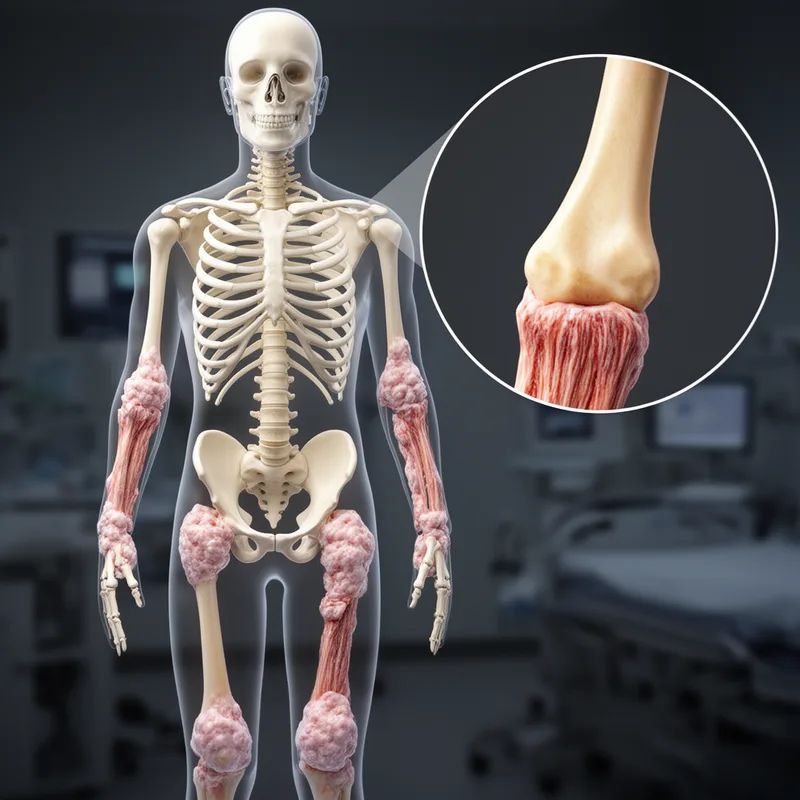
polyostotic fibrous dysplasia
- noun
- /ˌpɒliˈɒstɒtɪk ˈfaɪbrəs dɪsˈpleɪʒə/
- Specialized
- The doctor explained that polyostotic fibrous dysplasia can lead to deformities in multiple bones over time.
Examples
-
We present the case of a boy with polyostotic fibrous dysplasia involving the temporal bone, which was first diagnosed when he was 9 years old.
Academic text (2008) -
Windolz reported that the more extensive the skeletal involvement is, as with severe polyostotic fibrous dysplasia, the more frequent and severe the involvement of the face and skull is.
Academic text (2008) -
In patients with polyostotic fibrous dysplasia, regular monitoring is essential to manage associated complications.
-
Research indicates that polyostotic fibrous dysplasia may cause pain and structural changes in the affected bones.
Synonyms

A rare bone disorder that causes bones to become weak, change shape, and break easily
How Extensive
- Specialized

- Specialized
Surface Forms
Morphology
polyostotic + fibrous + dysplasia
The phrase is fully compositional: 'fibrous dysplasia' denotes abnormal fibrous growth in bone and 'polyostotic' (poly- = many; -ostotic/osteo- = relating to bone) indicates involvement of multiple bones. If a learner knows these constituent meanings, the overall sense—fibrous dysplasia affecting multiple bones—is directly derivable, and the medical morphological pattern is regular and cross-linguistically recognizable.
Etymology
Polyostotic fibrous dysplasia breaks into parts: poly- means 'many', ostotic relates to 'bone', and fibrous dysplasia describes bone being replaced by soft, fibrous tissue. So the term describes a condition that affects 'many bones' and makes them more like fibrous tissue than normal hard bone.

