

polygenism


 1
9.9
1
9.9
- noun
- /ˌpɒlɪˈdʒɛnɪzəm/
- Archaic
- For a time, it was possible to recognize a theological consensus on the Church's condemnation of polygenism, particularly in the years between Vatican I and Humani generis, but that consensus did not "persevere" among theologians after Vatican II.
Examples
-
In fact, Young rejected polygenism, which was promoted by many theologians and scientists in antebellum America to justify African chattel slavery.
Blog text (2) -
This was a blow to polygenism, more interested in the rigidity of types than in change.
Academic text (1996) -
Nor did most ethnologists rush to embrace polygenism.
Academic text (1996) -
He offers two examples: polygenism and artificial contraception.
Academic text (2002) -
By the 1860s, "polygenism formed a distinct if minority strand of British racial thought" (30). 1
Academic text (2007) -
A question often raised in this context is whether the human race descended from an original pair of two human beings (a teaching known as monogenism) or a pool of early human couples (a teaching known as polygenism).
Blog text (19) -
In this regard, Pope Pius XII stated: "When, however, there is a question of another conjectural opinion, namely polygenism, the children of the Church by no means enjoy such liberty."
Blog text (19) -
Environmental forces—climate, geography, society, education—became the preferred explanation to account for human variations rather than polygenism, which postulated multiple human creations.
Academic text (1996) -
The theory of polygenism suggests that humans may have originated from several distinct populations around the world.
-
Many scholars debate the merits of polygenism compared to monogenism, the idea that all humans share a single ancestry.
Synonyms
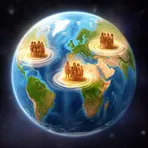
The idea that a group or language begins in more than one place, not just one
How Many Origins
- Archaic
1
9.9

- Specialized
Surface Forms
Morphology
polygenism = poly + gen + ism
The word uses classical elements meaning 'many' and 'birth/origin' plus '-ism', but the specialised theory meaning is not directly inferable for an average B1 learner.
Etymology
Polygenism comes from Greek parts poly- 'many' and gen- 'birth' or 'origin', so it literally means 'many beginnings'. That's why polygenism is the idea that a species, language, or people began in several different places instead of from a single origin.