
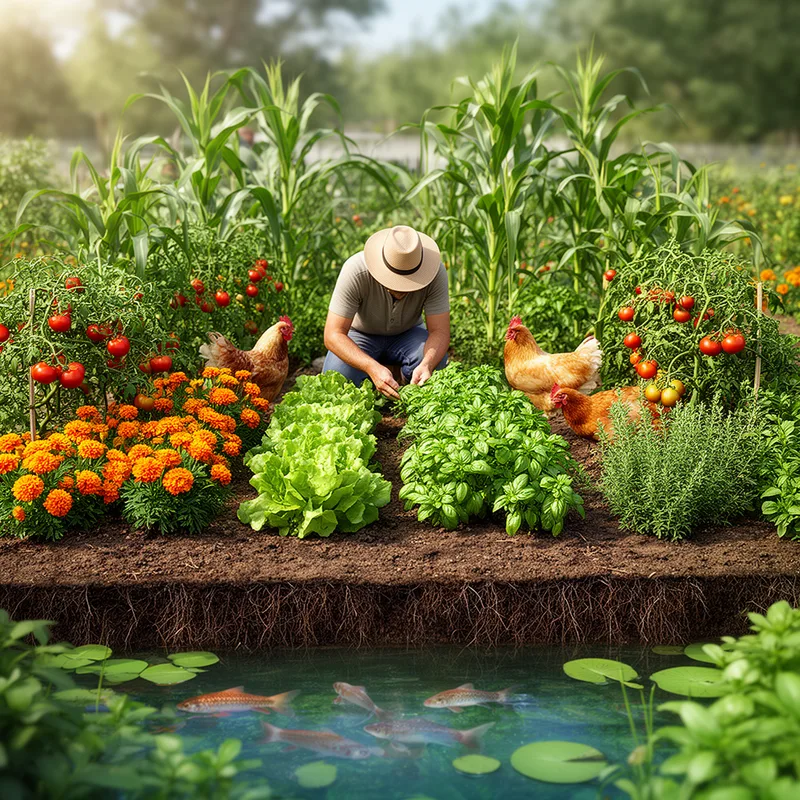
polyculture
 1
7.0
1
7.0

- noun
- /ˈpɒliˌkʌltʃər/
- Specialized
- On average, polyculture turns out to be more productive than monoculture," Naeem notes.
- polyculture operation
- species in a polyculture
Examples
-
Another possible polyculture combination under study is sea scallops growing together with salmon.
Academic text (1999) -
The specific form of polyculture utilized in marine waters consists of seaweed, bivalves, and marine finfish.
Academic text (1999) -
But you will always get a greater overall output from your polyculture.
Blog text (34) -
Furthermore, the market demand for each of the species in a polyculture operation may be low, thereby limiting their profitability.
Academic text (1999) -
Such results demonstrate that diverse polycultures can have higher and more stable yields that lead to increased economic benefits for farmers as well.
Academic text (2011) -
Polyculture consists of raising more than one species in a single location, possibly combining fish, bivalves (shellfish), or plants.
Academic text (1999) -
Note that these benefits apply particularly to polycultures (multi-species systems) of perennial staple crops.
Blog text (1) -
Farmers often use polyculture to grow multiple crops together, which can improve soil health.
-
In a polyculture system, beans can provide nitrogen to maize, enhancing their growth.
-
Many studies suggest that polyculture can lead to higher yields compared to monoculture farming.
Synonyms
Growing two or more crops together in the same field at the same time
Growing different crops together in the same area to help each other
How Diverse
- Specialized
1
7.0

- Specialized

 1
5.4
1
5.4
- Specialized
- Specialized
5
7.6
Surface Forms
Morphology
Etymology
The word polyculture combines Greek poly- meaning 'many' and culture from a root meaning 'to grow' or 'to cultivate', as in agriculture. So, polyculture is about growing many different plants or animals together in the same place to create a healthier, balanced system.