
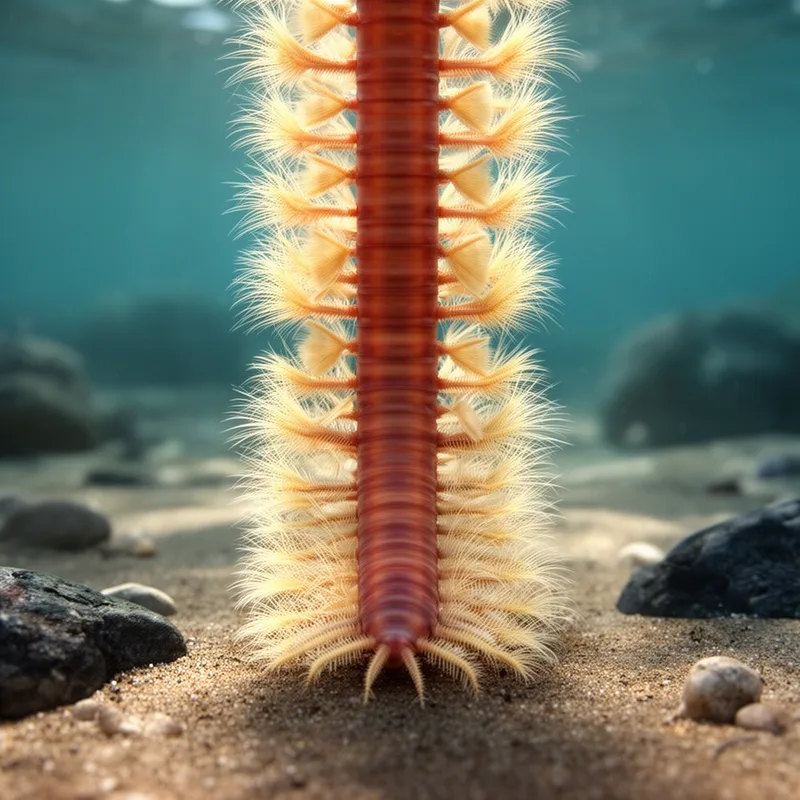
polychete
- noun
- /ˈpɒlɪˌkiːt/
- Specialized
- The distinctive bristles on a polychete help it to move along the ocean floor.
Examples
-
Marine biologists study polychetes to understand their role in aquatic ecosystems.
-
Many polychetes live in coral reefs.
-
Several species of polychete were discovered living near hydrothermal vents.
-
The polychete is a fascinating marine creature.
-
Marine biologists study polychetes to understand their role in aquatic ecosystems.
-
Several species of polychete were discovered living near hydrothermal vents.
-
The distinctive bristles on a polychete help it to move along the ocean floor.
Synonyms
 1
9.6
1
9.6

A worm with a long body divided into segments, like an earthworm

A marine worm with many body segments and bristles on each segment

A sea worm with many body segments and small bristles on each segment

A worm that lives in the sea with many small bristles on its sides that help it move

A long soft animal with a body made of many rings, like earthworms and leeches
Compounds
- Specialized
A worm that lives in the sea with many small bristles on its sides that help it move
Surface Forms
Morphology
polychete = poly + chaete
The word is historically built from Greek elements meaning 'many' and 'bristle', but the second element is not a standalone English word and the overall meaning is not directly recoverable for an average learner.
Etymology
Polychete comes from Greek parts poly- meaning 'many' (as in polyglot) and -chete meaning 'hair' or 'bristle'. So a polychete is a sea worm with many hair-like bristles that help it move.