
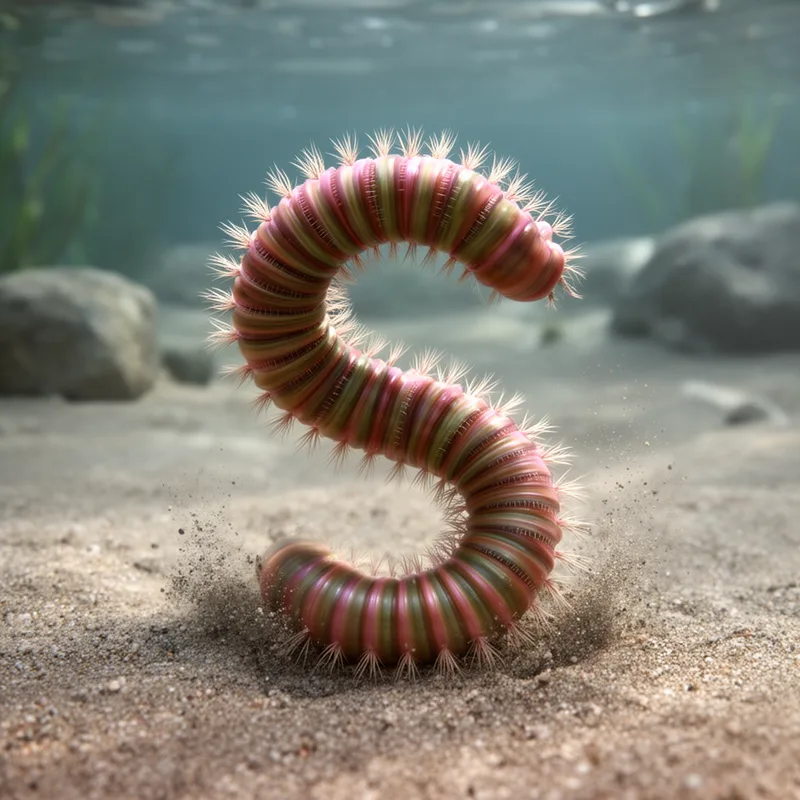
polychaete worm
- noun
- /ˈpɒlɪˌkiːt wɜrm/
- Specialized
- Many coastal areas lack obvious physical structures, such as those associated with structural vegetation, although reefs created by polychaete worms, bivalves, and other biogenic structures, such as feeding pits and tubes, may fill a similar role.
- polychaete worms and bivalves
Examples
-
In the tidal pools, we observed a polychaete worm burrowing into the sand with its bristled appendages.
-
During our dive, we spotted a colorful polychaete worm that curled its segmented body around a rock.
-
Bristled polychaete worms insinuated themselves in this living terrain, and sometimes entered the siphons of sponges and tunicates.
Academic text (1992) -
If any one of three major taxa—molluscs, polychaete worms, or crustacea—is reduced by more than 50 percent compared to numbers at remote reference stations, the farmer is required to come up with a plan to correct the problem.
Academic text (2000) -
The first wave of multicellular organisms that cement themselves to the crab's shell typically includes barnacles, delicate encrusting bryozoans, and tube-forming polychaete worms.
Academic text (2002) -
The marine biologist identified the polychaete worm as a key species in maintaining the health of the coastal ecosystem.
Synonyms
 299
1.0
299
1.0

A small soft animal without legs that lives in soil or water
 1
9.6
1
9.6
A worm with a long body divided into segments, like an earthworm

A marine worm with many body segments and bristles on each segment

A sea worm with many bristles and paired side appendages

A worm that lives in the sea with many small bristles on its sides that help it move

A long soft animal with a body made of many rings, like earthworms and leeches
A worm with a long body made of many ring-shaped parts like an earthworm or leech
Surface Forms
Morphology
The noun phrase is directly compositional: 'polychaete' names a specific type of marine, bristled worm and 'worm' simply classifies it, so the overall meaning is predictable from the parts. Although 'polychaete' is specialist vocabulary, a B1 learner who knows the constituent meanings would readily understand the compound as a type of worm.
Etymology
The noun polychaete worm comes from Greek words: poly meaning 'many' and chaete meaning 'bristle' or 'hair'. This gives a clear picture: these sea worms have many bristly hairs or legs along their bodies, so the name tells us what kind of worms they are.