
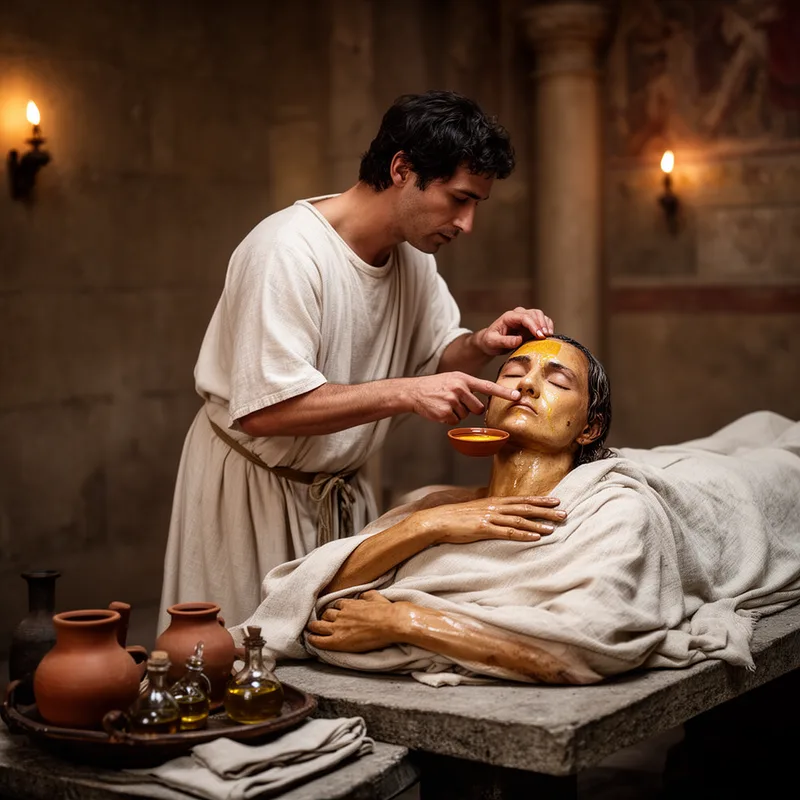
pollinctor
- noun
- Archaic
- In ancient Rome, a pollinctor would carefully anoint the deceased before burial ceremonies.
Examples
-
Historical texts describe the important role of the pollinctor in funeral rites.
-
The pollinctor prepared the body with great care.
-
The family hired a pollinctor to prepare the body according to traditional customs.
-
In ancient Rome, a pollinctor was essential for funerals.
-
In ancient Egypt, a pollinctor would carefully anoint the bodies of the deceased with oils before burial.
-
The role of a pollinctor was crucial in ensuring that the dead were honored and prepared for the afterlife.
-
During the ceremony, the pollinctor performed rituals to sanctify the body for its final resting place.
Synonyms

 31
5.5
31
5.5

A person who arranges funerals
 28
7.9
28
7.9
A person who prepares dead bodies and arranges funerals
 5
8.9
5
8.9
A person who uses chemicals to preserve dead bodies from decay

A person who prepares dead bodies for funerals by cleaning and dressing them

A person who puts oil on someone in a religious ceremony

A person who organizes ceremonies and practical details after someone dies
Surface Forms
Etymology
Pollinctor comes from a Latin word that means 'to anoint' or 'smear with oil', and it links to the English word anoint. In ancient times a pollinctor was the person who anointed and prepared the dead for burial, so the word today means someone who prepares a body for burial.