
polis
 2
9.1
2
9.1

- noun
- /ˈpɒlɪs/
- Specialized
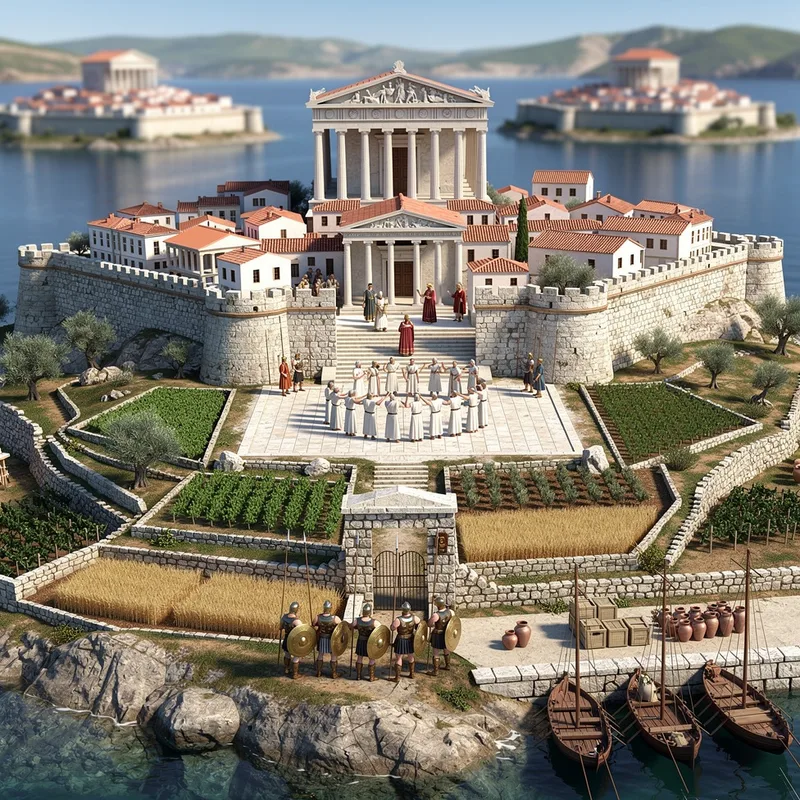
- The ancient Greek polis was a center of political and social life.
- Athenian polis
- Greek polis
Examples
-
At the same time, Athenian success at hoplite warfare enabled the polis to raise its horizons far beyond Attica once it achieved political stability.
Academic text (1995) -
The good of the polis itself, however, required the existence of the philosopher.
Academic text (1998) -
Can Politics exist without a polis?
-
What minimum safe distance will these officials from the rich nations take from the polis?
Academic text (2002) -
What is the essential difference between the polis and all other associations?
Academic text (2001) -
The end of the polis is happiness.
Academic text (2001) -
Classical Greece was an ancient society so powerful and so wise, it could use the polis to influence the citizens to create culture.
-
For the Athenians, the polis was exclusive.
Fiction book (2001) -
Socrates was charged by the Athenian polis with corrupting the youth of Athens.
Academic text (2006) -
As Aristotle explained, at the beginning, the defining mark of the polis, or the polity, was the capacity to make decisions binding on everyone through the force of law.
Academic text (2005)
Synonyms
 8
7.7
8
7.7
A country or area with its own government and laws
Surface Forms
Etymology
Polis comes from ancient Greek and means 'city'. In ancient Greece a polis was a small city that acted like its own country with its own government and laws, so polis came to mean a 'city-state'.