
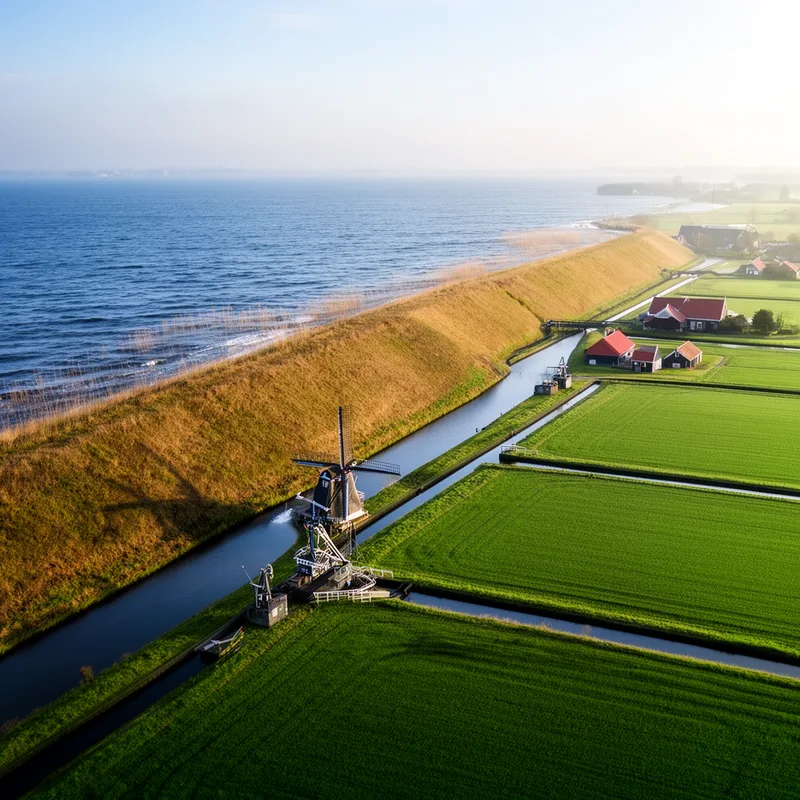
polder


 1
9.6
- noun
- /ˈpoʊldər/
- Cyclists often enjoy the scenic views while riding through the Dutch polders during the summer.
Examples
-
A polder is an embankment that forms a complete enclosure, so that water rises around it but the area within remains unflooded.
Academic text (1997) -
The government of the Netherlands was very interested in polder projects for Bangladesh and had great expertise in building them.
Academic text (1997) -
A large-scale "chinampa" system, similar to the polders in the Netherlands, is established and maintained in the southern region of the basin of Mexico.
Academic text (1992) -
Most of this area lies within polders of the Coastal Embankment Project and suffers from "drainage congestion."
Academic text (1997) -
The mills were built to drain the excess water from the Alblasserwaard polders—which are situated below sea level—after which the water was sluiced into the river Lek.
Academic text (2006) -
The farmers successfully transformed the wetland into polders to cultivate crops.
-
In the Netherlands, polders are crucial for maintaining land use in areas below sea level.
Surface Forms
Etymology
The word polder comes from the Dutch word polder, which means 'land taken from the sea or a lake'. Picture land inside low dikes with windmills or pumps that move the water away; that's why a polder is low ground reclaimed from water and kept dry.