
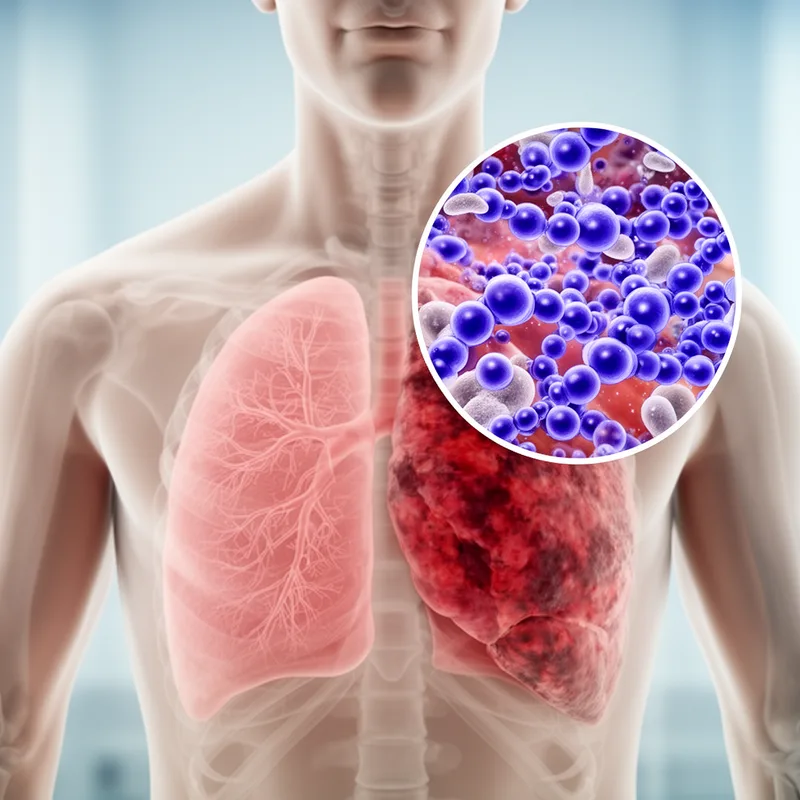
pneumococcal pneumonia


 1
6.7
1
6.7
- noun
- /ˌnjuːməˈkoʊkəl njuˈmoʊniə/
- Specialized
- Figure 3. Age and sex of patients with invasive pneumococcal pneumonia caused by Streptococcus pneumoniae serotype 5, western Canada, 2000-2009. Median age: 41 years.
Examples
-
AUDs increase both the predisposition and illness severity of pneumococcal pneumonia infections, which may be due to the pro-inflammatory and oxidative stress response of AMs.
Academic text (2016) -
Vaccination can significantly reduce the incidence of pneumococcal pneumonia among children and the elderly.
-
Symptoms of pneumococcal pneumonia include a high fever, chills, and difficulty breathing.
-
Many public health campaigns aim to raise awareness about pneumococcal pneumonia and the importance of vaccination.
Synonyms
 121
4.3
121
4.3
A serious lung infection that makes breathing hard and causes fever
Surface Forms
Morphology
The phrase combines the adjective 'pneumococcal' (involving pneumococcus bacteria) with 'pneumonia' (a lung infection), so the meaning 'pneumonia caused by pneumococcus' is directly derivable from the constituents. This is a straightforward compositional medical compound following common noun phrase patterns, so a learner who knows both words would understand it.
Etymology
Pneumococcal pneumonia gets its name from the germ that often causes it, the pneumococcus. The first part pneumo- means 'lung' and -coccal means 'round germs', so the name literally says a 'lung infection from round germs', which is why it means pneumonia caused by this kind of germ.