
plexus periarterialis
- noun
- Specialized
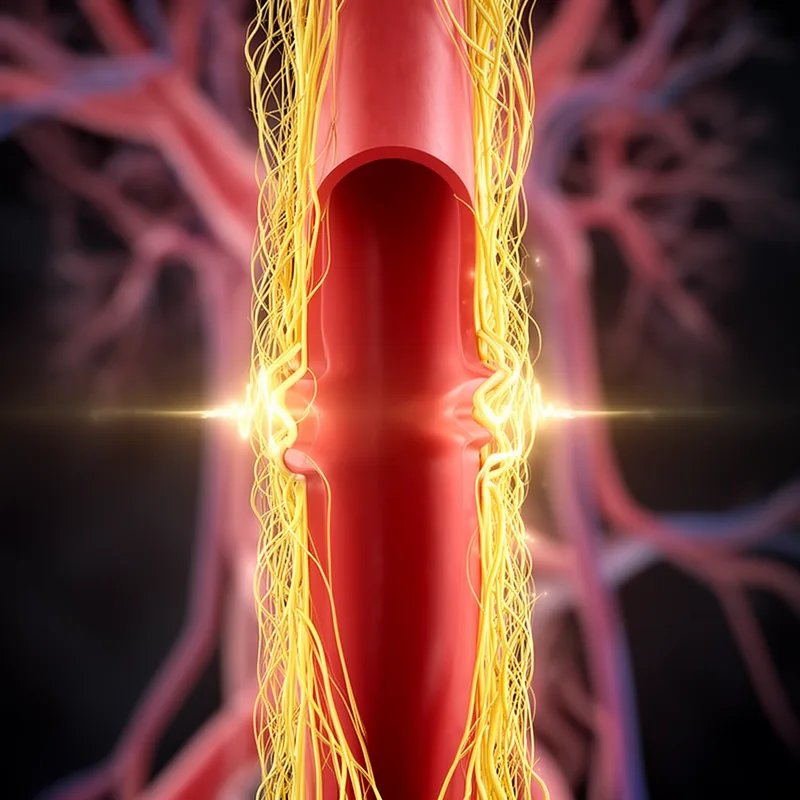
- The plexus periarterialis provides autonomic nerve supply to the walls of major arteries.
Examples
-
In surgical anatomy, the plexus periarterialis must be preserved to maintain vascular function.
-
Damage to the plexus periarterialis can affect the regulation of blood flow.
-
The plexus periarterialis is crucial for regulating blood flow.
-
Can you explain the function of the plexus periarterialis?
-
The plexus periarterialis is essential for the autonomic regulation of blood vessels in the body.
-
Surgeons must identify the plexus periarterialis during surgery to avoid disrupting nerve supply.
-
In the human body, the plexus periarterialis plays a vital role in maintaining vascular health.
Synonyms

A group of nerves that surrounds an artery and helps control blood flow
Surface Forms
Morphology
plexus + periarterialis
The phrase is compositionally analyzable: 'plexus' = network and 'periarterialis' can be parsed as peri- (around) + arterialis (artery-related), yielding 'network around an artery.' However, this relies on knowledge of Latin/medical morphology (peri-, arterial) that a typical B1 learner is unlikely to possess, and the term is specialized rather than everyday English, so full understanding is not guaranteed.
Etymology
Plexus periarterialis comes from Latin: plexus means 'braid' or 'network' and periarterialis means 'around an artery'. Picture a braid of nerves wrapped around a 'blood vessel' sending messages to control blood flow, so the name describes a network of nerves that runs alongside an artery.

