
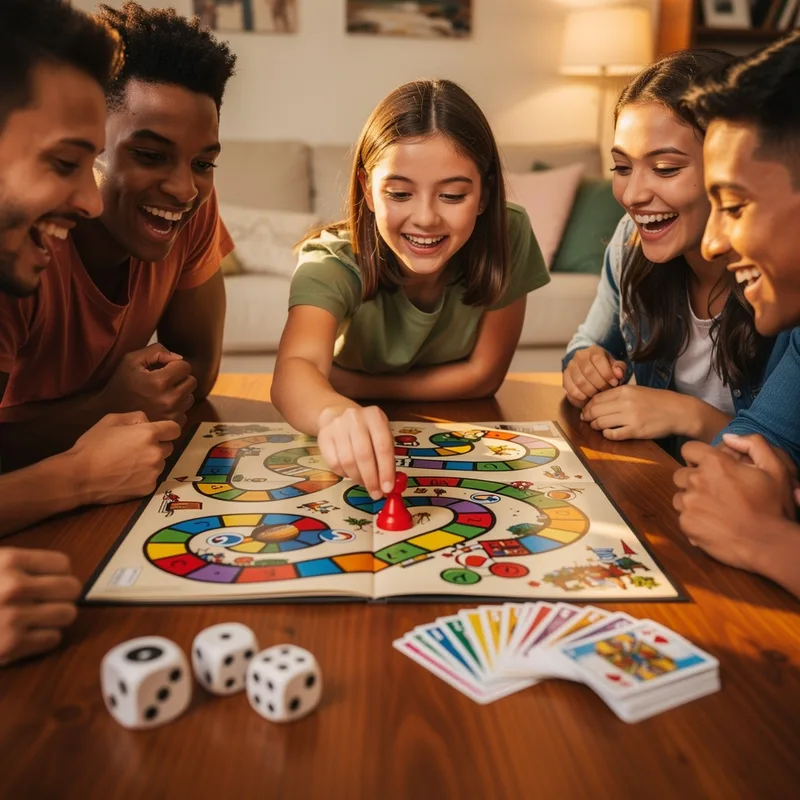
to play game
 200
1.0
200
1.0

- phrasal verb
- /pleɪ ɡeɪm/
- At the picnic, the children loved to play games like tag and hide-and-seek.
- play games with friends
- play games online
- play games together
Loading YouTube…
Watch on YouTubeWe've all been playing games all of our lives.
- We've all been playing games all of our lives.
- And, and here's the true story, because they played game seven against Miami.
- R Yeah, well, just be hard to play games, wouldn't it?
- You're probably thinking they all play games, but no, some men, some men.
- And fun's not always about laughing and playing games and being on vacation.
- And we just like do improv and play games and they're like, we don't get it.
- And I think that is, I know the whole point of playing games is the whole social aspect.
Examples
-
The children dashed from one spot to another, playing games and comparing toys.
Fiction book (1991) -
Occasionally, the teacher had the students play games to assist them with both listening and cooperation skills.
Academic text (2004) -
All right, so we're all playing games, right?
-
You grew up playing games where competition is accepted.
-
OK, so now we're ready to start playing games with this strange new world.
-
We talk and we play games and we sing songs.
-
Stop playing games over there and come here.
-
Students gather in our lively libraries to read magazines, play games, and drink coffee.
Academic text (2015) -
And you'll be able to play games with us in VR.
-
During the family reunion, we all decided to play games to bond and have fun together.
Synonyms
 ∞
1.0
∞
1.0
Take part in a game or sport for fun
 39
2.7
39
2.7
To play or move around in a lively, cheerful way
 1
9.6
1
9.6
To enjoy yourself by behaving in a lively, playful way
Antonyms

How Competitive

Surface Forms
Morphology
The meaning is directly and compositionally derived from 'play' (to participate in an activity) plus 'game' (a recreational contest), so a learner who knows both words can infer the MWE refers to engaging in a recreational activity. While native usage would normally be 'play a game' or 'play games', the missing article does not obscure the transparent, literal relation between the parts, and similar verb+noun combinations exist cross-linguistically.
Etymology
Play games comes from the simple picture of people doing activities with rules, like board or ball games. Here play means to take part and game means a rule-based activity, so the phrase means 'to take part in activities for fun'.