
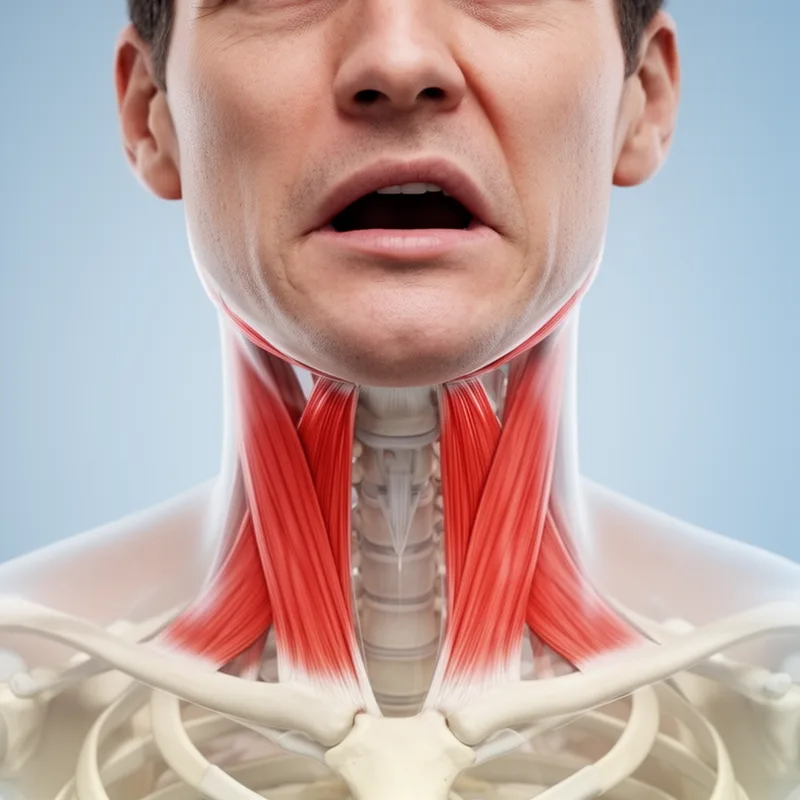
platysma
- noun
- /pləˈtɪzmə/
- Specialized
- The platysma muscle helps pull down the corners of the mouth when you frown.
- platysma muscle
Examples
-
The gland is exposed by incising through the skin, subcutaneous tissue, and platysma muscle.
Academic text (2004) -
The submandibular capsule is sutured to the cervical fascia below the digastric muscle, and the cut ends of the platysma muscle are repaired.
Academic text (2004) -
The second arch gives rise to an operculum that contains the platysma.
Academic text (2006) -
The platysma muscle likely contributed to some degree to the activity recorded at both electrode locations.
Academic text (2011) -
The lower part is covered by skin, subcutaneous tissue, platysma muscle, and an investing layer of deep cervical fascia.
Academic text (2004) -
The incision is made through the skin, subcutaneous tissue, and platysma muscle to expose the gland (figure 3).
Academic text (2004) -
It passes deep into the platysma muscle and lateral to the posterior facial vein and the investing layer of the deep cervical fascia.
Academic text (2004) -
During surgery, the doctor carefully cut through the platysma to access the underlying tissue.
-
In a facial expression analysis, the platysma plays a significant role in conveying emotion.
Surface Forms
Etymology
Platysma comes from the Greek root platys meaning 'broad' or 'flat', like a plate lying over the neck. That's why the name fits: the platysma is a wide, thin muscle that spreads across the front of the neck.

