
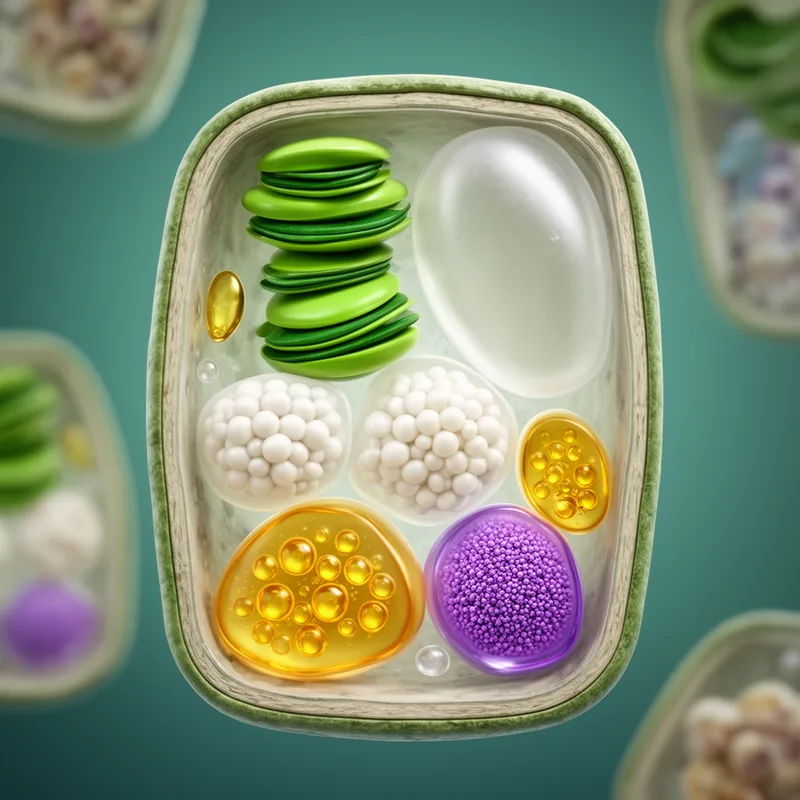
plastid
 2
9.9

- noun
- /ˈplæstɪd/
- Specialized
- In most crops, plastids are maternally inherited only and not transmitted via pollen.
- plastid genes
- plastid inheritance
- plastid genome
Loading YouTube…
Watch on YouTubePlants have a an extra small circular chromosome because they also have one in the chloroplasts and the other types of plastids.
- Plants have a an extra small circular chromosome because they also have one in the chloroplasts and the other types of plastids.
Examples
-
The other mechanism for concentrating inorganic carbon around the plastid is the use of a C4 (four carbon intermediate) CCM.
Blog text (18) -
To the known functions of microbodies, we can thus add the control of mitochondrial and plastid division, at least in certain organisms.
Academic text (1996) -
A potential solution to this problem is to incorporate the gene into the plastid's genome.
Academic text (2001) -
Raflezia's plastids, on the other hand, appear to have lost their DNA, and with it, the ability to photosynthesize.
-
Such preferential movement of plastids may furnish the key to understanding the mechanism of separation of organelles.
Academic text (1996) -
Interestingly, their findings corresponded to two typical patterns of plastid genes: that is, maternal and biparental transmission without Mendelian ratios.
Academic text (1996) -
Transferred sequences from organelle genomes are called nuclear mitochondrial transfers (numts) and nuclear plastid transfers (nupts) or organellar gene transfers.
Academic text (2018) -
To resolve these deepest branches in the green plant tree of life, researchers have used data from slowly evolving regions in the nuclear 18S rDNA gene and the plastid rbcL (ribulose-bisphosphate carboxylase) gene.
Academic text (2008) -
Plastids are essential for photosynthesis in green plants, helping them convert sunlight into plastids.
-
In certain plants, pigments stored in plastids give fruits their vibrant colors, attracting pollinators.
Surface Forms
Morphology
plastid = plast + id
The components 'plast-' and '-id' are Greek combining forms used in scientific vocabulary and do not yield an obvious meaning to an average B1 learner.
Etymology
Plastid comes from the Greek root plast-, which means 'to form' or 'to shape', and it is the same root behind the common word plastic. So a plastid is like a small 'formed' part of a plant cell that makes or stores pigments, starch, or oils.