
plastically


 1
7.5
- adverb
- /ˈplæstɪkli/
- Specialized
- But polymer composites are different. Where a steel component plastically deforms rather slowly on impact, absorbing crash energy as it folds up, composite parts have to be specially designed to fracture.
- deform plastically
Examples
-
This is fairly rare on Earth, but on Venus, the rocks are at a temperature that is about half their melting point, and they tend to behave plastically.
Academic text (1991) -
Because of the relatively low hardness of today's Ni-P/Al-Mg substrate, head-disk impacts can plastically deform and permanently damage the surface, with a loss of recorded data.
Academic text (1996) -
"They begin to flow plastically.
Academic text (2001) -
Below this transition zone, rocks deform plastically, which reduces the permeability effectively to zero.
Academic text (2002) -
Ductility, the ability to plastically deform—to bend without breaking, for instance—is a trouble area for BMGs.
Academic text (2012) -
Unfortunately, the effect was never more than local: "Plastically, spatially, neither the tack nor the tassel-and-stud acts upon the picture; each suggests illusion without making it really present." (n25)
Academic text (2002) -
The emanatory nature of God is described plastically by Bacharach, Saruk's disciple, as follows: "The nature of goodness is to emanate goodness, and if there is no world, to whom shall He emanate goodness?"
Academic text (1990) -
At higher velocities, however, the correlation breaks down as materials plastically deform and erode when the impact pressure from the target approaches the finite yield strength of the penetrator: YP?tv (see figure 3).
Academic text (2003) -
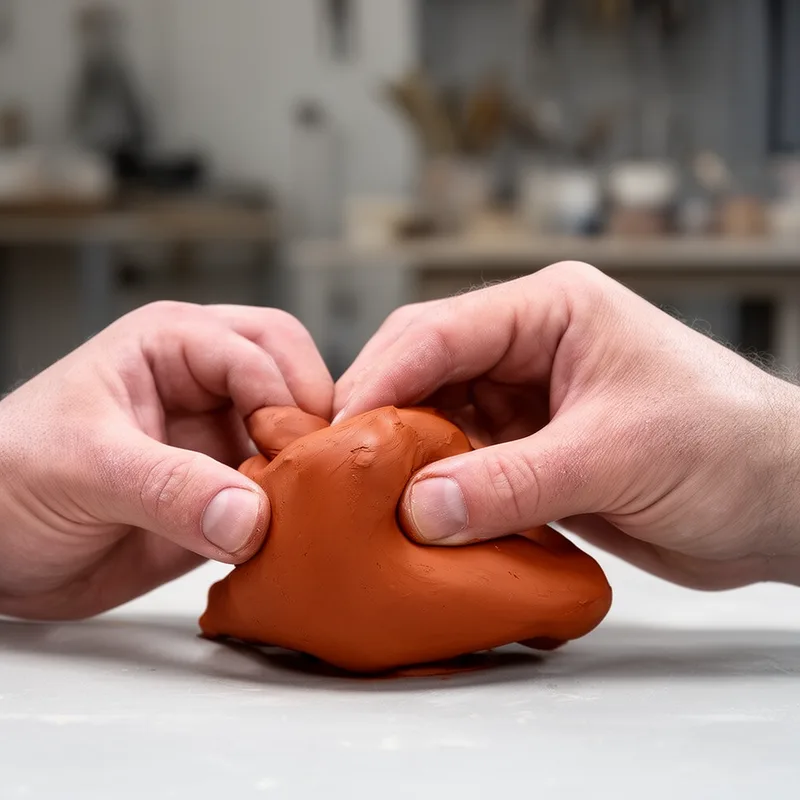
The clay can be shaped plastically when heated, allowing artists to create intricate designs.
-
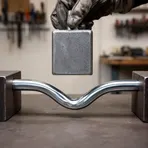
During the experiment, the material deformed plastically, demonstrating its ability to withstand stress without breaking.
Synonyms
 1
7.8
In a way that does not stretch or return to shape when force is applied
How Moldable

Surface Forms
Morphology
Etymology
Plastically comes from the root plast-, from an old Greek word meaning 'to form' or 'to mold'. Think of a sculptor shaping clay: something that behaves plastically can be changed or shaped without breaking, which is why we use this word for materials or layers that bend and keep a new shape.