
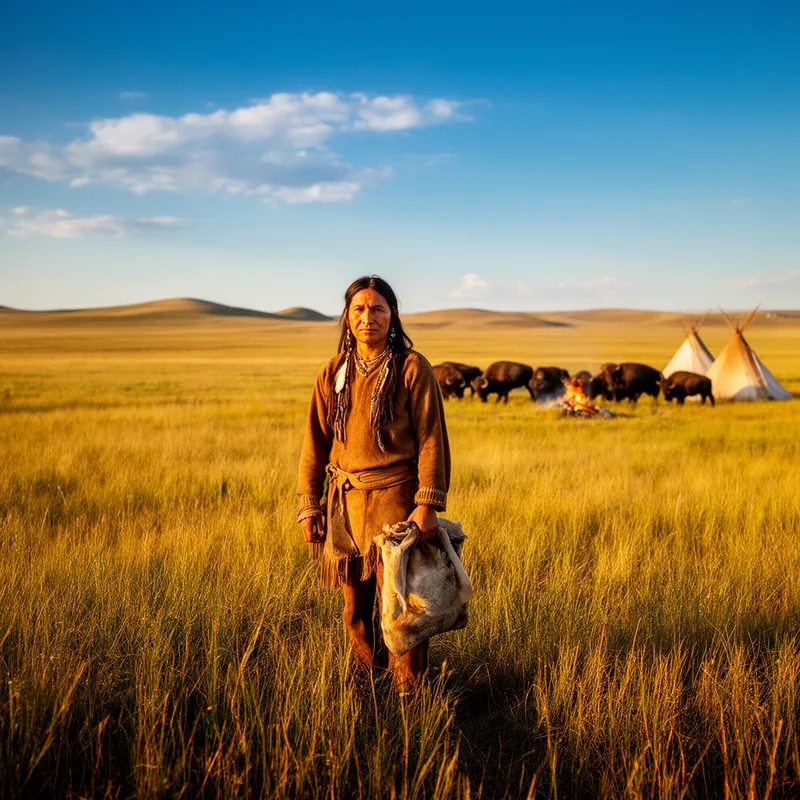
plains inhabitant
- noun
- US
- Researchers studied the lifestyle of the plains inhabitant during the 19th century.
Examples
-
A plains inhabitant often knows the land very well.
-
The plains inhabitant often relied on buffalo for food and clothing.
-
As a plains inhabitant, she was familiar with the vast open landscapes and harsh weather.
-
Many plains inhabitants depend on agriculture for their livelihood.
-
Many plains inhabitants rely on agriculture for their livelihoods, growing crops suited to the flat terrain.
-
The festival celebrated the culture and traditions of the plains inhabitants, featuring food, music, and artisanal crafts.
-
As a plains inhabitant, he had a deep understanding of the local wildlife and the best practices for farming in the area.
Synonyms

 1
7.8
1
7.8

A person who lives on wide flat land like the Great Plains

A woman who lives on open grasslands, especially the Great Plains
Surface Forms
Morphology
The meaning is directly compositional: an 'inhabitant' of the 'plains' is simply a person who lives on extensive flat land. This follows a regular noun+noun (or noun phrase + inhabitant) pattern that is cross-linguistically common and thus immediately predictable for a B1 learner who knows both constituents.
Etymology
The phrase plains inhabitant paints a simple picture: plains means wide, flat grassland and inhabitant means a person who lives there. Imagine someone on the Great Plains, depending on buffalo and the open land for food and clothes. So it means 'a person who lives in a plains region'.