
placode


 1
9.9
- noun
- /ˈpleɪkoʊd/
- Specialized
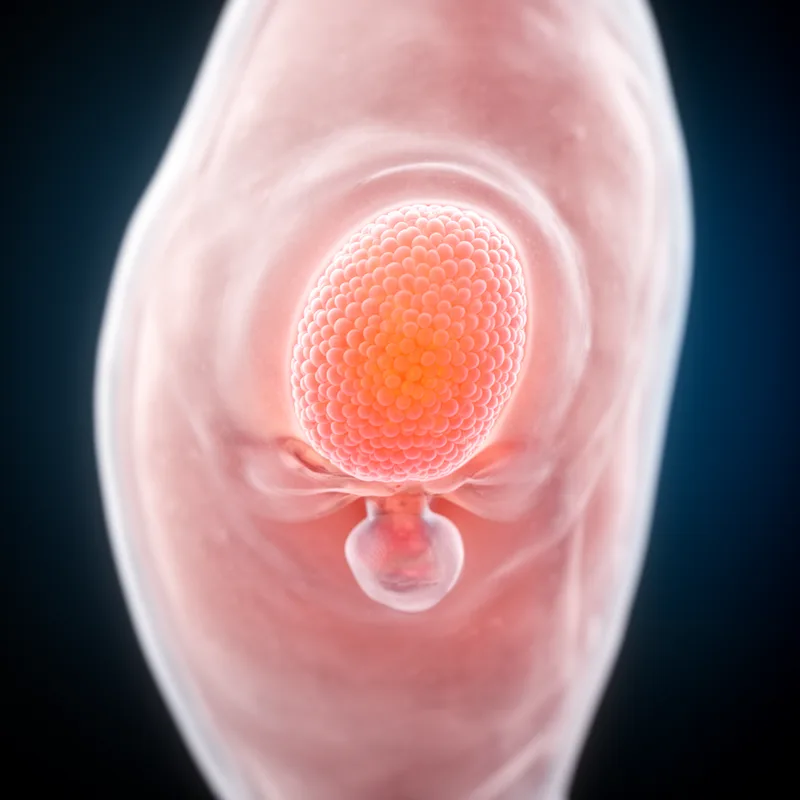
- Two ectodermal thickenings (the nasal placodes) arise on each side of the dependent part of the frontonasal process.
- nasal placode
Examples
-
An accessory nasal placode may be present either above or below the normal nasal placode.
Academic text (2005) -
In 1987, Reddy and Rao reported a case of a third nostril that was situated below the left nostril; they hypothesized that the extra nostril arose as a result of an accessory placode or pit.
Academic text (2005) -
An accessory nasal placode may be present either above or below the normal nasal placode.
Academic text (2005) -
First of all, the dorsal lateral placodes include the trigeminal placode, OK.
-
By the time the embryo reaches 6 mm in length, the nerve approaches the epibranchial placode, and large, dark nuclei mark the development of the geniculate ganglion.
Academic text (2003) -
By the time the embryo reaches 14 mm in length, the geniculate ganglion and the greater superficial petrosal nerve are well defined, and the epibranchial placode has disappeared.
Academic text (2003) -
The embryonic development of the heart begins with the formation of the cardiac placode, which will develop into crucial structures.
-
Researchers studied the optic placode to understand how the eye forms during embryonic development.
-
In the early stages of growth, the ectodermal placode differentiates into various sensory organs.
Surface Forms
Morphology
placode = placo + ode
A technical formation from Greek combining elements ('placo-' + '-ode') that are not productive or familiar to average learners, so the meaning cannot be derived from known English base words.
Etymology
Placode comes from Greek parts plac- meaning 'flat' or 'plate' and -ode meaning 'form' or 'like', so it literally means 'plate-like'. A helpful image is a small flat plate of cells in the embryo that will grow into an organ, which is why a placode is that first thickened patch of cells.