

pituitary dwarf
- noun
- /pɪˈtjuːɪˌtɛri dɔrf/
- Specialized
- The pituitary dwarf requires regular medical attention and hormone therapy.
Examples
-
The pituitary dwarf faced many challenges growing up.
-
Unlike an achondroplastic dwarf, a pituitary dwarf has normal body proportions.
-
Advances in medicine allow a pituitary dwarf to achieve near-normal height with early treatment.
-
Many pituitary dwarfs are often misunderstood.
-
The doctor explained that a pituitary dwarf has a deficiency of growth hormone, leading to a height much shorter than average.
-
Many people with the condition of being a pituitary dwarf face challenges related to their short stature in daily life.
-
Research shows that a pituitary dwarf can lead a normal life, despite their shorter height compared to peers.
Synonyms

A person much shorter than usual because a small part of the brain makes too little growth hormone
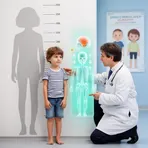
A person with very short height caused by not enough growth hormone rather than by a bone growth condition
Surface Forms
Morphology
The phrase is a straightforward compositional noun phrase: 'pituitary' qualifies the type of 'dwarf' by referencing the pituitary gland/function, and 'dwarf' denotes a person of unusually short stature. A learner who knows both constituents can readily infer that it means short stature caused by a pituitary/growth-hormone issue, so this is transparent rather than idiomatic.
Etymology
The term pituitary dwarf comes from the small gland called the pituitary, which makes the growth hormone that helps us grow. If that gland does not make enough hormone, a person stays very short like a dwarf even though their body parts are normal, so the name means 'short because of a pituitary problem'.

