
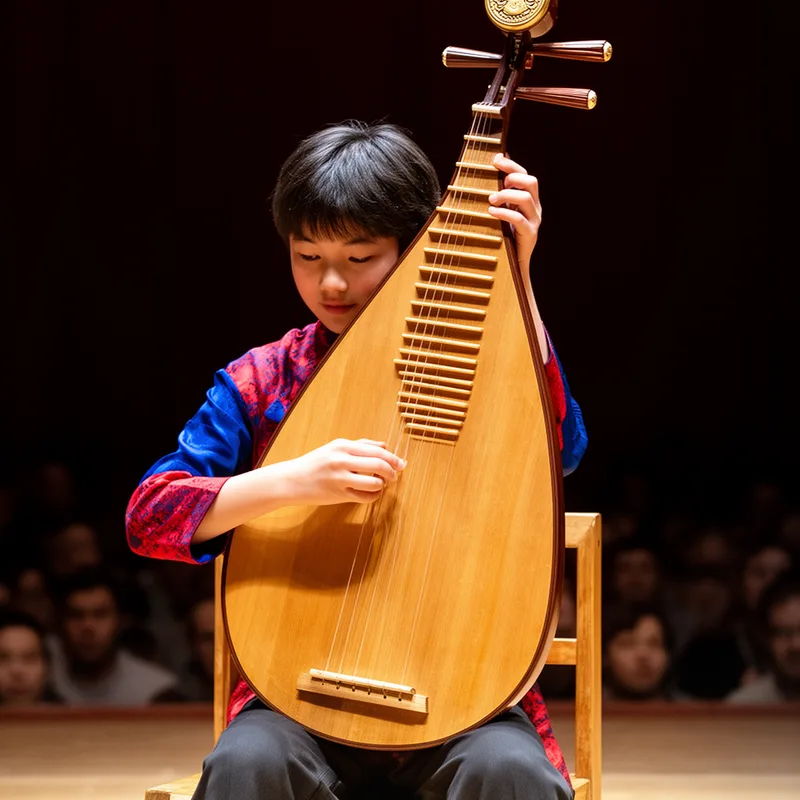
pipa


 1
9.9
1
9.9
- noun
- /ˈpiːpɑː/
- The pipa is a four-stringed, pear-shaped, plucked lute that is known by several different names in East and Southeast Asia.
- the Chinese pipa
Examples
-
During the festival, she showcased her talent by performing a traditional piece on the pipa.
-
I then taught students to sing a song with English words to a Chinese tune that I played on the pipa.
Academic text (2006) -
We can play music that sounds Chinese on the black keys of the piano, but it will never have the same distinct timbre as a pipa or a guzheng.
Academic text (2006) -
The best measure of her achievement is that her instrument, the pipa—a Chinese lute that dates back some 2,000 years—is no longer an exotic curiosity.
Blog text (17) -
For example, the erhu shares characteristics with the violin, as does the di with the transverse flute, the qin or zheng with the harp, and the pipa with the guitar or mandolin.
Academic text (1999) -
The musician skillfully played the pipa, captivating the audience with its beautiful melodies.
-
He admired the craftsmanship of the pipa, noting its elegant pear-shaped body and fine strings.
Compounds


- Specialized
A South American toad that carries its eggs in holes on its back until they become tadpoles
Surface Forms
Etymology
Pipa comes from China and is made of two parts, pi and pa, which copy the two quick 'pluck' sounds used when playing it. So a pipa is a pear-shaped string instrument you play by plucking, and the name helps you remember that action.