
pinene


 1
8.1
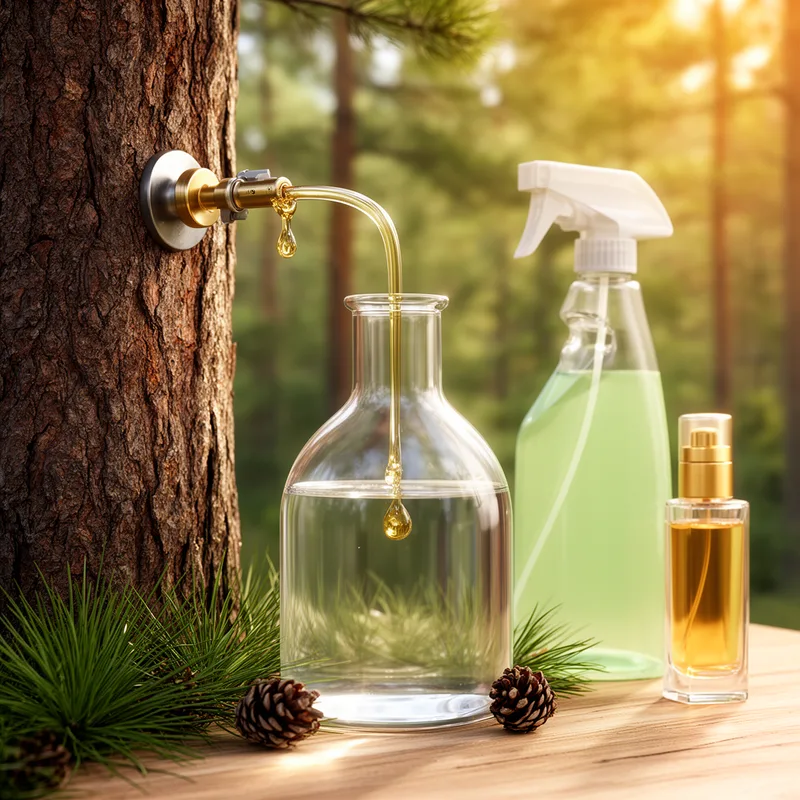
A clear liquid from pine sap that gives pine trees their smell and is used to make cleaners and perfumes
- noun
- /ˈpaɪˌniːn/
- Specialized
:
pineno
- The aroma of pinene can enhance the fragrance of various cleaning products.
Examples
-
Moreover, pinene reacts with ozone to form pinol, which combines with water to form a hydrate that has a melting point higher than the boiling point of water.
Academic text (1996) -
Camphor is synthesized from the hydrocarbon pinene, a turpentine derivative.
Academic text (2007) -
The concentration of terpenes, including B-limonene and alpha-pinene, is also included in Table 2.
Academic text (1997) -
Many essential oils, such as pinene, emit a fresh scent reminiscent of pine forests.
-
In industrial applications, pinene is used as a solvent due to its low toxicity.
Surface Forms
Morphology
Etymology
Pinene comes from pine, the tree, plus the chemical ending -ene, which you can think of as meaning 'a kind of chemical'. So pinene is the natural chemical from pine that gives the tree its fresh, piney smell.