
pilosebaceous


 1
9.9
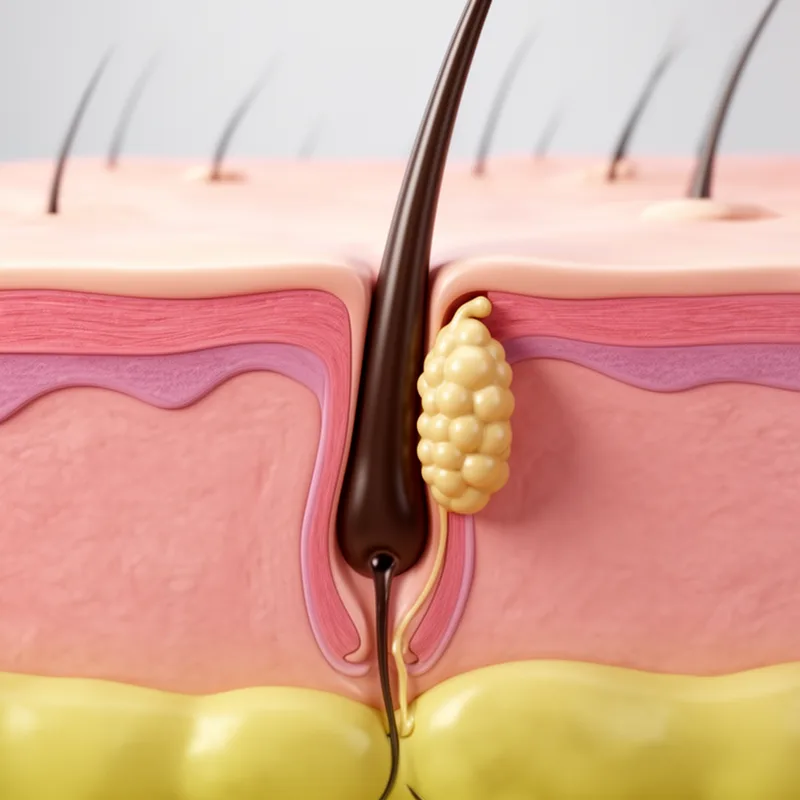
Relating to a hair and the small oil gland beside it in the skin
- adjective
- /ˌpɪloʊsɪˈbeɪʃəs/
- Specialized
:
pilossebáceo
- Scientists studied the structure of the pilosebaceous gland under a microscope.
Examples
-
Acne commonly affects the pilosebaceous units of the skin.
-
Inflammation of the pilosebaceous tissue can lead to various skin disorders.
-
The pilosebaceous unit is essential for hair growth.
-
In humans, the pilosebaceous glands produce sebum.
-
The dermatologist examined the patient's skin for issues related to the pilosebaceous glands.
-
Acne occurs when the pilosebaceous units become clogged with oil and dead skin cells.
-
An essential part of skincare is understanding how to care for the pilosebaceous follicles.
Surface Forms
pilosebaceous positive
Morphology
Etymology
The word pilosebaceous comes from parts that mean 'hair' and 'oil': pilo- means 'hair' and sebum means 'fat' or 'oil', so pilosebaceous describes the small skin unit made of a hair and its oil gland.