

piggyback plant
- noun
- /ˈpɪɡiˌbæk plænt/
- Specialized
- The piggyback plant produces new plants that grow directly from its leaves.
Examples
-
Gardeners often use the piggyback plant for its unique ability to propagate itself.
-
We admired the piggyback plant for its beautiful flowers and unusual growth habit.
-
PHOTO (BLACK & WHITE): Piggyback plant (Tolmiea menziesii) grown from foliar plantlets in complete and various deficient Hoagland solutions after 8 weeks.
Academic text (2001)
Synonyms

A small plant that makes baby plants on its leaves and lives for many years
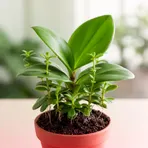
A small plant that makes tiny new plants at the base of its leaves

An indoor plant that makes small baby plants on its leaves
Surface Forms
Morphology
The noun is transparently built from 'piggyback' (to ride on or attach to something) + 'plant', so a learner who knows both words can infer it denotes a plant that carries or bears other plants attached to it (i.e., plantlets riding on the parent). While a learner might not grasp the exact botanical detail, the core relational meaning is directly derivable from the constituents.
Etymology
Piggyback plant gets its name because the mother plant often grows tiny baby plants on its leaves, so they look like they are taking a piggyback ride on the plant. That's why the name points to its habit of making 'new plants' that you can separate and grow on their own.

