
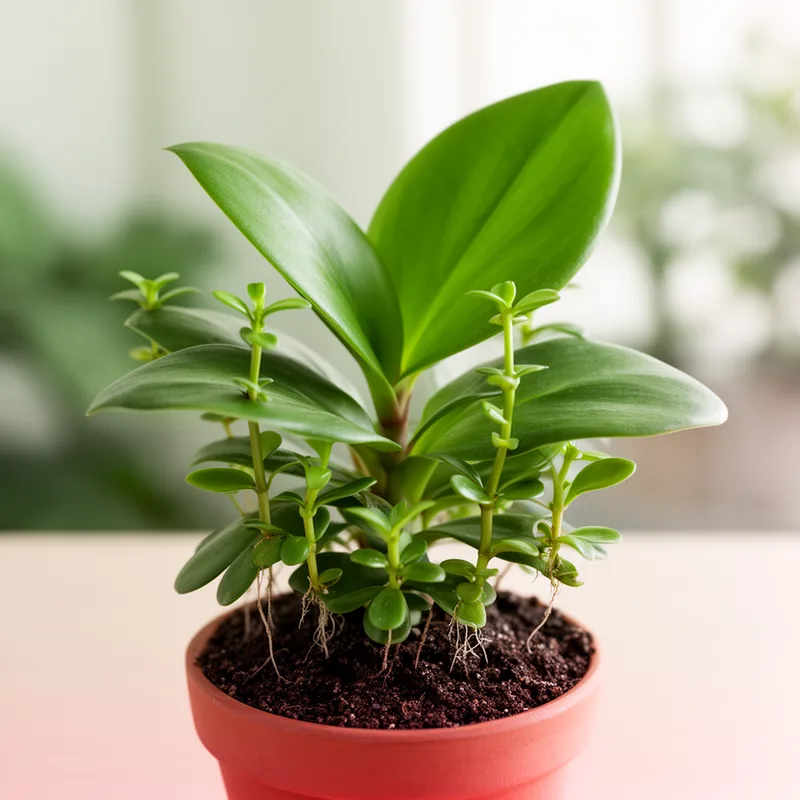
pickaback plant
- noun
- /ˈpɪkəˌbæk plænt/
- Specialized
- The pickaback plant produces tiny plantlets at the base of its leaves, making it easy to propagate.
Examples
-
She added a flourishing pickaback plant to her indoor collection for its unusual growth habit.
-
The pickaback plant thrives in shady areas.
-
Botanists admire the pickaback plant for its ability to self-propagate through leaf plantlets.
-
I bought a pickaback plant for my garden.
-
Botanists admire the pickaback plant for its ability to self-propagate through leaf plantlets.
-
She added a flourishing pickaback plant to her indoor collection for its unusual growth habit.
-
The pickaback plant produces tiny plantlets at the base of its leaves, making it easy to propagate.
Synonyms
A small plant that makes baby plants on its leaves and lives for many years
A small green plant that grows baby plants on its leaves

An indoor plant that makes small baby plants on its leaves
Surface Forms
Morphology
pickaback + plant
The name combines a metaphorical notion of 'pickaback' (on the back) with 'plant', so a learner who knows 'pickaback' could plausibly infer a plant that carries small plantlets on its leaves. However 'pickaback' is rare/archaic and the botanical sense is specialized and metaphorical rather than strictly compositional, making the meaning not fully predictable for a typical B1 learner.
Etymology
Pickaback plant gets its name from the sight of tiny 'plantlets' that grow where a leaf meets its stem, like little plants riding on the parent's back. That's why the name fits this herb that easily makes new plants from its leaves.

