
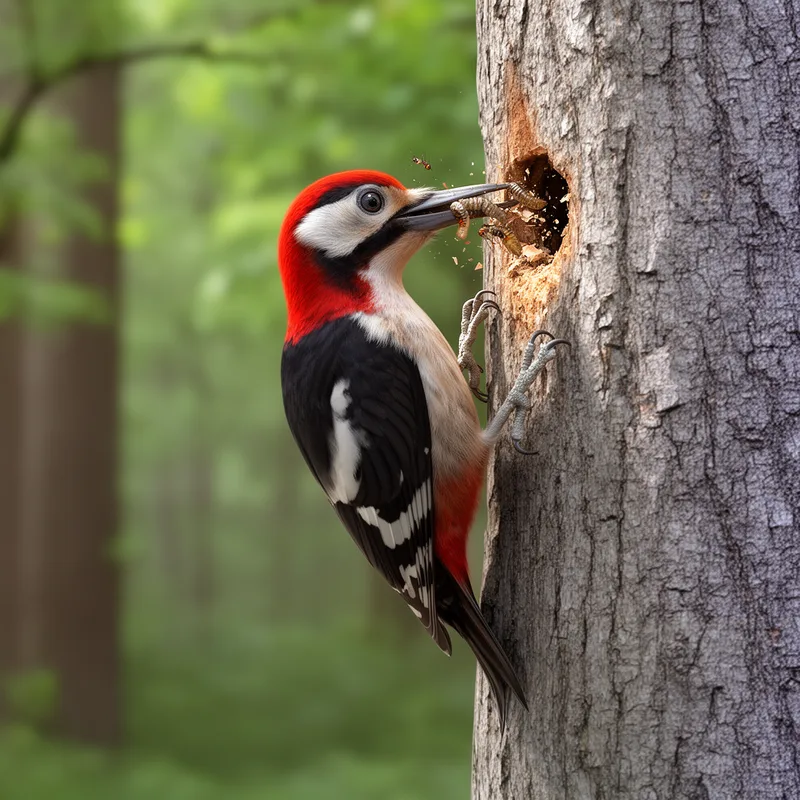
piciform bird
- noun
- /ˈpɪkɪˌfɔrm bɜrd/
- Specialized
- Many piciform birds, such as woodpeckers, have specialized feet for gripping bark.
Examples
-
The piciform bird drilled a hole in the old oak tree to find insects.
-
A piciform bird pecked at the tree trunk.
-
Scientists studied several piciform birds to understand their adaptation to climbing.
-
The piciform birds are known for their distinctive calls.
-
Many piciform birds, such as woodpeckers, have strong bills that help them find insects in trees.
-
The piciform bird used its sharp bill to dig into the bark of the tree for food.
-
Scientists researched various piciform birds to learn about their unique features and behaviors.
Surface Forms
Morphology
piciform + bird
The adjective 'piciform' is a rare, technical term (relating to the order Piciformes/woodpecker‑like) and is not transparently built from common English morphemes that a B1 learner would know; only 'bird' is immediately clear. Because the crucial lexical piece is specialized and its meaning cannot be derived from ordinary knowledge of English words, a B1 learner who merely knows 'bird' would not be able to infer the MWE meaning.
Etymology
Piciform bird The name piciform bird comes from Latin: picus meaning 'woodpecker' and the ending -form meaning 'shape' or 'like'. So it literally means a bird 'like a woodpecker', which is why scientists use it for woodpeckers and similar birds.

