
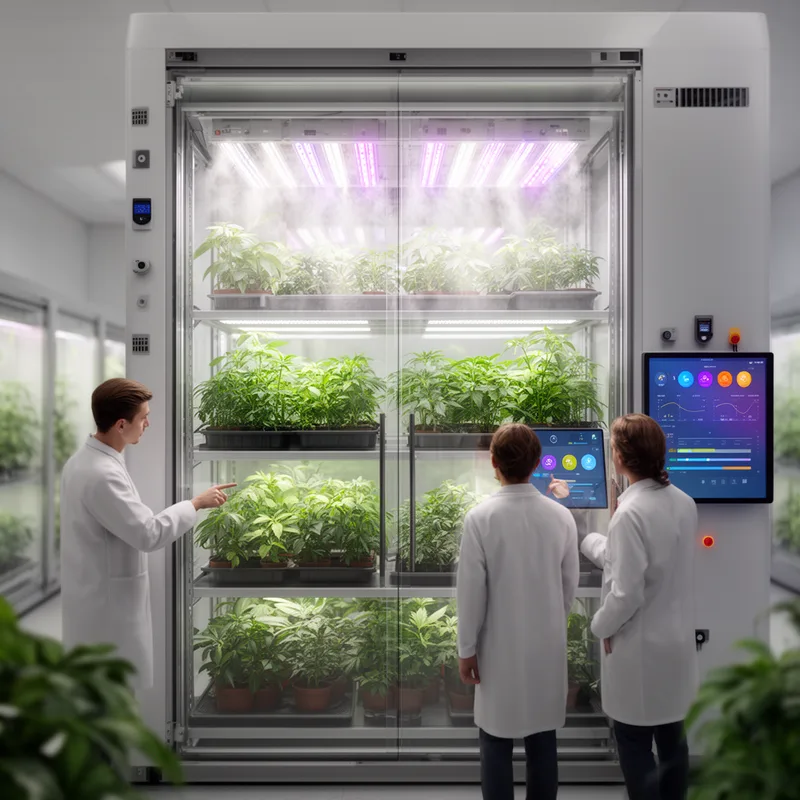
phytotron


 1
9.9
- noun
- /ˈfaɪtəˌtrɒn/
- Specialized
- Scientists used the phytotron to test how different temperatures affect plant growth.
Examples
-
The university built a new phytotron to support advanced agricultural research.
-
Inside the phytotron, researchers can precisely control light, humidity, and temperature for experiments.
-
The phytotron is essential for studying plant genetics.
-
Researchers use a phytotron to simulate different climates.
-
The researchers utilized a phytotron to examine how different light levels affect plant growth.
-
In the phytotron, scientists can carefully regulate humidity, temperature, and light to optimize plant development.
-
We observed various plant species thriving in the phytotron under controlled conditions that mimic their natural habitats.
How Controlled

Surface Forms
Morphology
phytotron = phyto + tron (semi-transparent) = phyto + tron
The meaning (a device/facility for plants) follows directly from 'phyto-' (plant) + '-tron' (instrument), but both are technical combining forms that many learners may not recognize.
Etymology
Phytotron comes from the Greek root phyto- meaning 'plant' and the ending -tron meaning 'tool' or 'machine'. So a phytotron is like a 'machine for plants', a special room or building where scientists control light, heat and humidity to study how plants grow.