
phytochrome
- noun
- /ˈfaɪtəˌkroʊm/
- Specialized
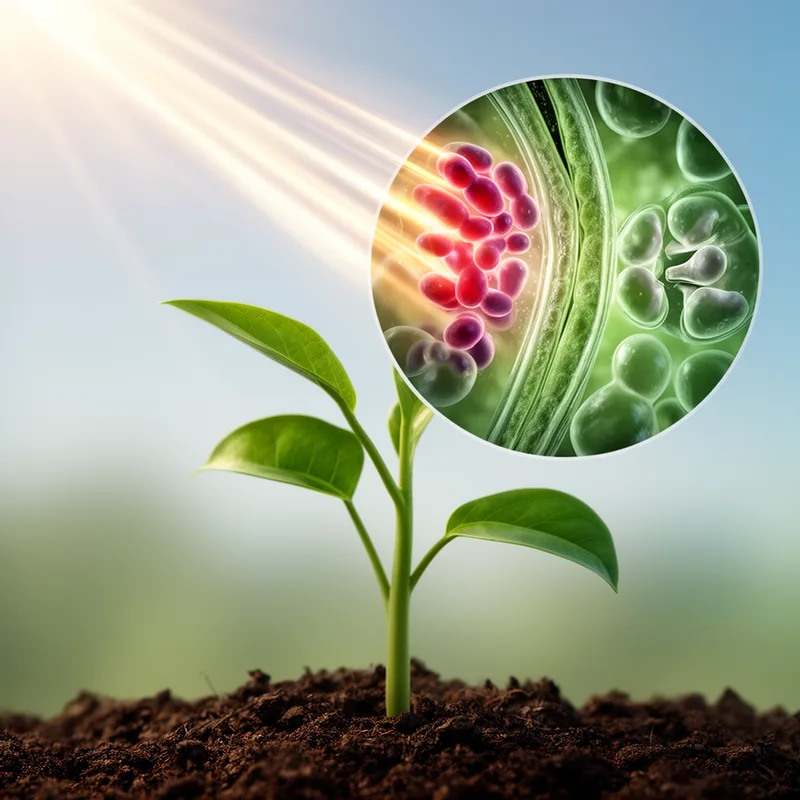
- Scientists have found that phytochrome is essential for plants to detect and use sunlight effectively.
- phytochrome-mediated elongation
- phytochrome-mediated
- phytochrome-mediated stem
Examples
-
The phytochrome in plants helps them respond to changes in light conditions.
-
Conversely, phytochrome-deficient mutants of Brassica rapa constitutively expressing the elongated phenotype had lower fitness relative to the plastic wild type at low density.
Academic text (2000) -
They soon isolated the pigment, which would be named "phytochrome."
Academic text (2001) -
Two are blue-light cryptochromes and five are phytochromes, which respond best to red or far red light.
Academic text (2005) -
And so there are phytochromes, phyto being plant chromic proteins that can absorb red light and far red light.
-
These responses, which are mediated by phytochrome A, include seedling germination and de-etiolation in response to brief pulses of very dim light.
Academic text (2000) -
In the 1950s came one of BARC's many landmark accomplishments: the discovery and isolation of phytochrome, the biological pigment that controls flowering and many other processes.
Academic text (2001) -
Evidence suggests that phytochrome could mediate the production of AS transcripts of SPA3 in response to some light conditions, thus promoting plant photomorphogenesis (Shikata et al. 2014).
Academic text (2017) -
For example, Schmitt et al. (1995) tested the adaptive value of phytochrome-mediated stem elongation responses to neighbors using genetically modified plants lacking these plastic responses.
Academic text (2000) -
Research shows that phytochrome plays a crucial role in regulating plant growth and development.
Surface Forms
Morphology
Etymology
Phytochrome comes from two Greek parts: phyto- meaning 'plant' and -chrome meaning 'colour', like in monochrome. It is literally a 'plant colour' — a pigment that changes with light so plants can tell day from night and the seasons and grow at the right time.

