
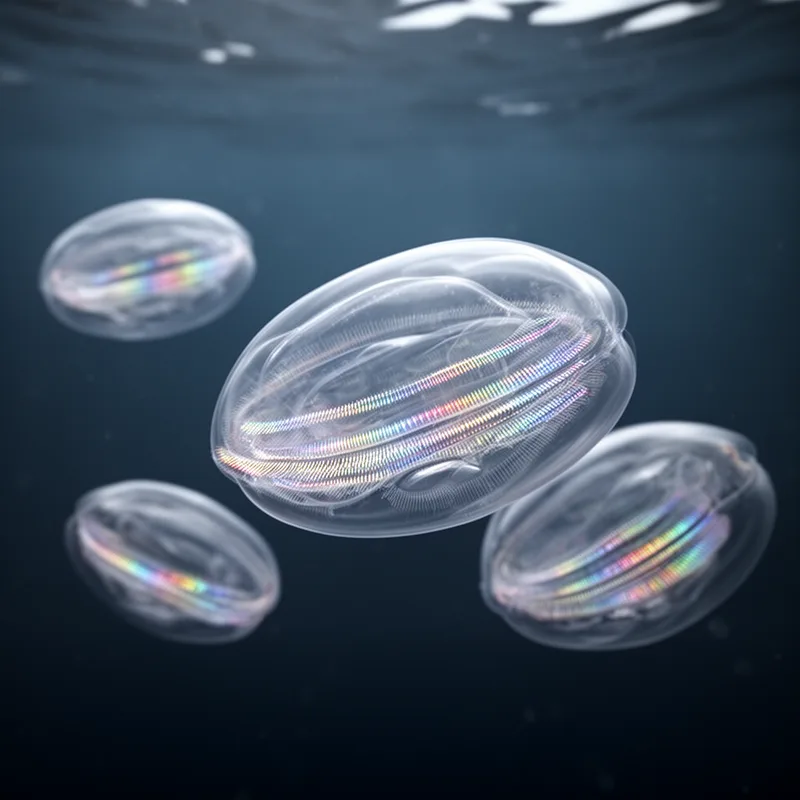
phylum Ctenophora
- noun
- /ˈfaɪləm ˌtɛnəˈfɔrə/
- Specialized
- Unlike jellyfish, members of the phylum Ctenophora move by beating rows of cilia.
Examples
-
The phylum Ctenophora includes species commonly known as comb jellies found in oceans worldwide.
-
Many species within the phylum Ctenophora are bioluminescent.
-
Researchers study the transparent bodies characteristic of animals in the phylum Ctenophora.
-
The phylum Ctenophora includes fascinating creatures like the comb jelly.
-
The phylum Ctenophora is unique for its beautiful gelatinous bodies that shimmer in the light.
-
Many marine scientists focus their research on the phylum Ctenophora due to its intriguing locomotion methods.
-
Creatures in the phylum Ctenophora, like comb jellies, are often found drifting in warm coastal waters.
Synonyms



 1
9.9
1
9.9
A group of sea animals with eight rows of comb-like hairs used to move
Surface Forms
Morphology
The phrase is fully compositional: 'phylum' names the taxonomic rank and 'Ctenophora' names the group, so together they denote the biological phylum of comb jellies. This follows standard biological naming conventions (rank + taxon) found across languages, so a learner who knows both constituent words can readily infer the meaning.
Etymology
Phylum Ctenophora comes from the parts cteno- and -phora, which mean 'comb' and 'to carry'; these sea animals have rows of tiny comb-like hairs they beat to move, so we call them 'comb jellies' today.