
phylogenetically


 1
9.9
1
9.9
- adverb
- /faɪloʊdʒəˈnɛtɪkli/
- Specialized
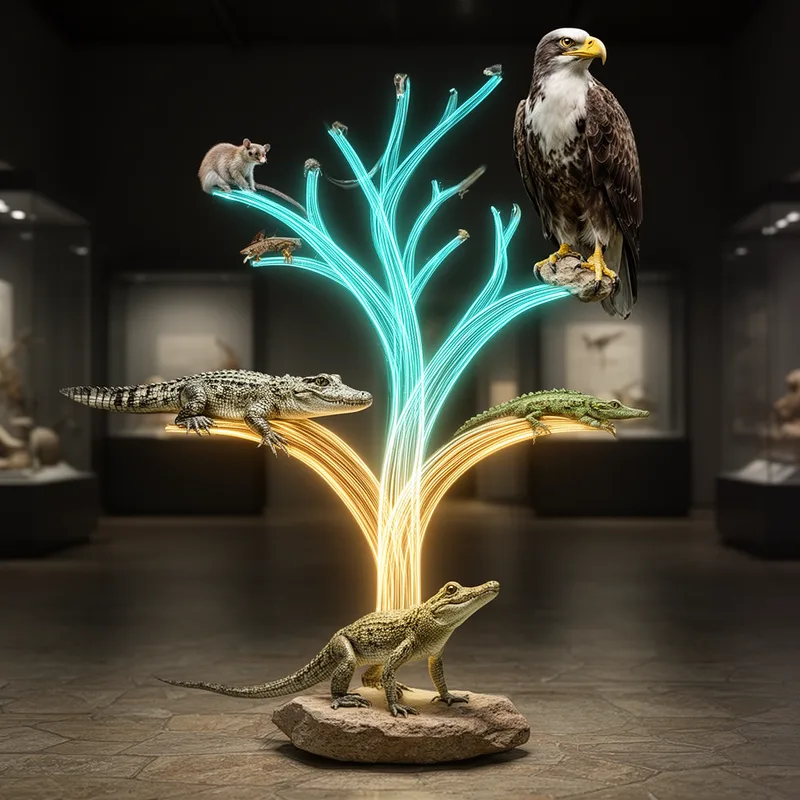
- Many species can be classified phylogenetically based on their evolutionary relationships.
- phylogenetically distant species
- phylogenetically related
- phylogenetically distant
Examples
-
Highlighting these convergences need not and should not mean neglect of phylogenetically relevant characteristics and their central significance in biosystematics.
Academic text (2001) -
We carried out this test by calculating the evolutionary changes in care using the method of phylogenetically independent contrasts (Felsenstein 1985).
Academic text (2006) -
The results presented in this article are a reflection of how phylogenetically comprehensive, rather than just broad, the human diet is.
Academic text (2008) -
And you're raising an important question, which is phylogenetically, how did that happen?
-
All of the other cases of HGT that you described in your blog were between phylogenetically related species.
Blog text (14) -
There is no such thing as two organisms that evolved on Earth that are completely phylogenetically unrelated.
Blog text (14) -
The species is phylogenetically related to C. haemulonii (1).
Academic text (2013) -
Even phylogenetically distant species, with an affinity for a particular habitat, are good candidates for CP studies.
Academic text (2011) -
Diadromy as a life-history strategy has evolved in phylogenetically diverse fish groups (McDowall 1997).
Academic text (2009) -
The mycelium also evolved independently in phylogenetically distinct organisms traditionally treated as fungi, such as the oomycetes.
Academic text (2001)
Synonyms
 4
7.7
4
7.7
In a way that shows how living things change over many generations
Surface Forms
Morphology
phylogenetically = phylogenetic (semi-transparent) = phylo + gen + etic + ally
While the components 'phylo' and 'genetic' are clear, the specific scientific meaning requires specialized knowledge.
Etymology
Phylogenetically comes from Greek parts phylo- meaning 'tribe' or 'group' and -genetic (from genesis) meaning 'origin' or 'birth'. So to speak phylogenetically is to talk about the 'family tree' or long history of living things, which is why we say two species are related by that shared history.