
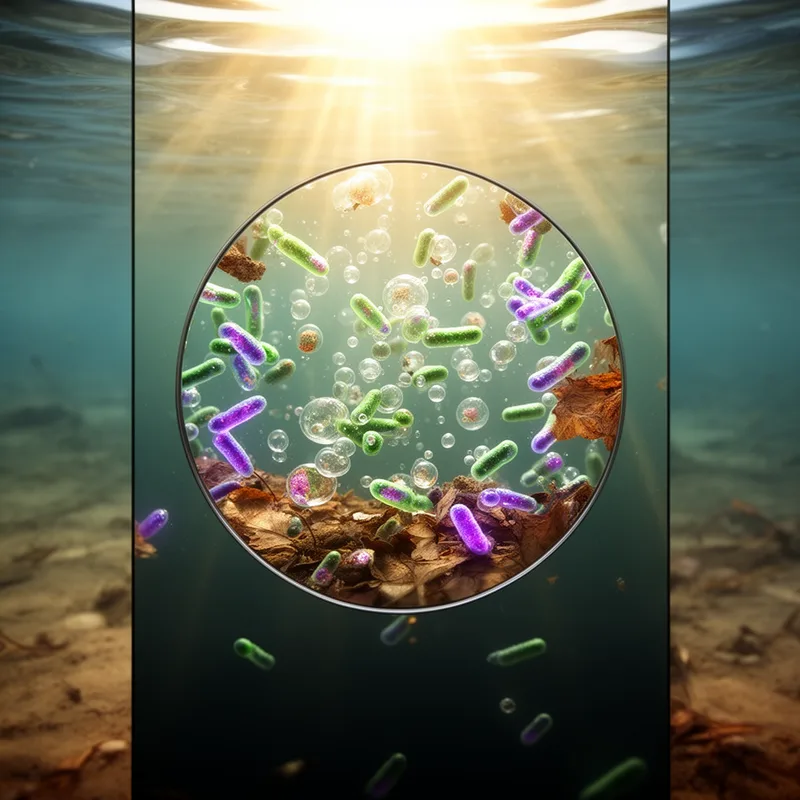
phototrophic bacteria
- noun
- /ˌfoʊtəˈtrɒfɪk bækˈtɪəriə/
- Specialized
- Some phototrophic bacteria can adapt to low-light conditions by altering their photosynthetic pigments.
Examples
-
The presence of phototrophic bacteria is crucial for converting sunlight into energy within aquatic ecosystems.
-
The study focused on the role of phototrophic bacteria in recycling nutrients in the ecosystem.
-
Many phototrophic bacteria thrive in environments with ample sunlight, such as shallow lakes.
-
Many phototrophic bacteria thrive in sunlight.
-
The phototrophic bacteria in the pond are essential for the ecosystem.
-
Many phototrophic bacteria thrive in environments with ample sunlight, such as shallow lakes.
-
Some phototrophic bacteria can adapt their photosynthetic processes to capture energy from sunlight.
Synonyms

Bacteria that use sunlight to make food from carbon dioxide or organic matter
Surface Forms
Morphology
The meaning 'bacteria that obtain energy from light' is directly and compositionally derivable from 'phototrophic' (convert light into food energy) + 'bacteria' (single-celled organisms). This adjective+noun compound follows straightforward morphological composition and has clear cross-linguistic parallels, so a learner who knows both constituent meanings would understand the MWE.
Etymology
Phototrophic bacteria comes from two parts: photo meaning 'light' and trophic meaning 'feeding'. The image is simple: these bacteria 'feed' on sunlight to get energy and grow, so the name means 'bacteria that get energy from sunlight'.

