
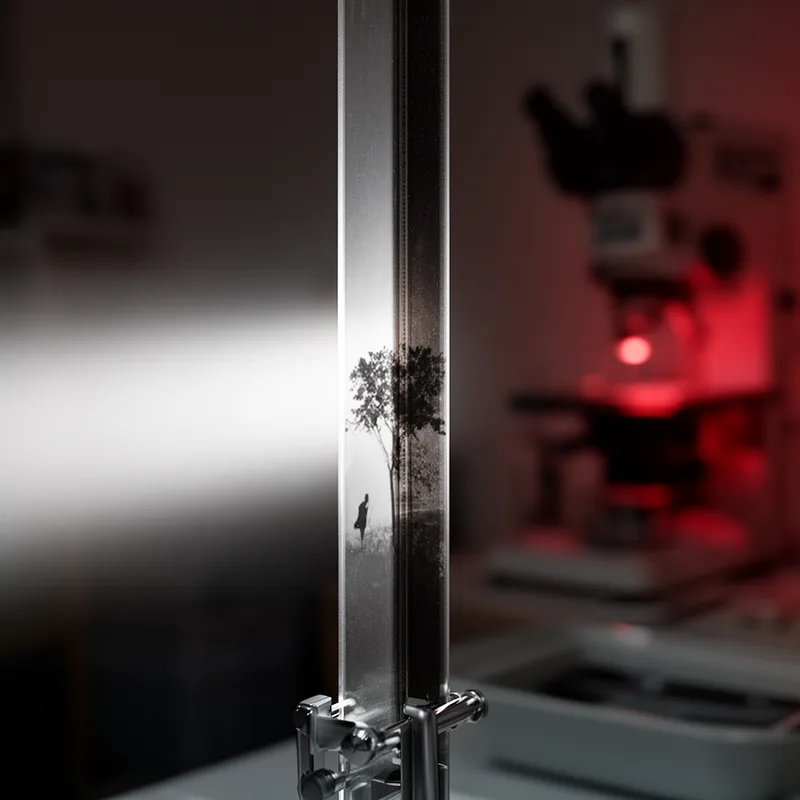
photographic emulsion
- noun
- /ˌfoʊtəˈgræfɪk ɪˈmʌlʃən/
- Specialized
- Baade had, in the previous years, almost exclusive use of the telescope for galaxy work, and he experimented freely with new photographic emulsions and filters of different colors.
Examples
-
To understand why this is so, consider that photographers usually take their pictures with photographic emulsions that respond to at most around 1 percent.
Academic text (1991) -
By this time, photographic emulsions had improved considerably since the era of Holden's efforts.
Academic text (2004) -
This is strictly for historical reasons: the photographic emulsions in use before electronic detectors were not sensitive to red light.
Academic text (2005) -
Photographers rely on photographic emulsion to capture images on film.
-
The quality of a photograph often depends on the photographic emulsion used during development.
-
Before digital photography, photographic emulsion was essential for developing film into pictures.
Synonyms

 2
7.8
2
7.8

A light sensitive layer on film or paper that holds tiny bits of silver
How Light-Sensitive
- Specialized

- Specialized
1
4.2
Surface Forms
Morphology
The phrase is fully compositional: 'photographic' (relating to photography) modifies 'emulsion' (a light-sensitive coating), so the combined meaning — the light-sensitive coating used in photography — is directly derivable from the constituents. Although somewhat technical, the logic is transparent and mirrors equivalent constructions in other languages, so a B1 learner who knows both words will readily understand it.
Etymology
The compound noun photographic emulsion comes from the word emulsion, which means a smooth, jelly-like mix. Photographers spread a thin layer of this jelly with tiny silver particles onto film or paper so it would 'catch' light, so photographic emulsion means the 'light-sensitive' coating used to make photos.