
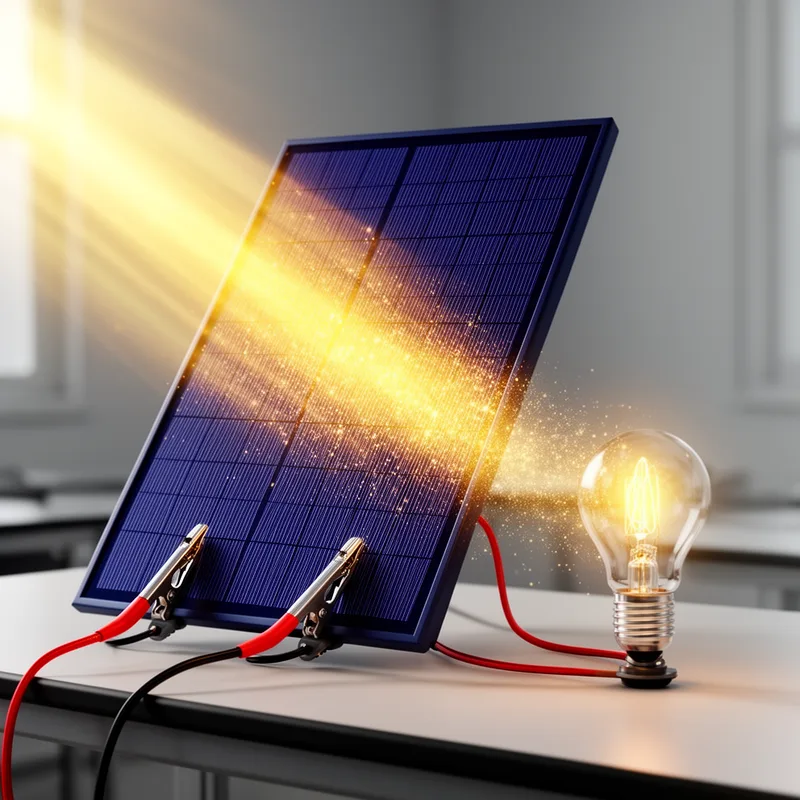
photoelectricity
- noun
- /ˌfoʊtoʊɪˈlɛktrɪsɪti/
- Specialized
- Solar panels generate photoelectricity when exposed to sunlight.
Examples
-
Einstein won the Nobel Prize for his explanation of the photoelectricity phenomenon.
-
The study of photoelectricity has contributed to advances in modern physics.
-
The concept of photoelectricity is crucial in modern physics.
-
Solar panels generate photoelectricity from sunlight.
-
Solar panels generate photoelectricity when exposed to sunlight.
-
The study of photoelectricity has contributed to advances in modern physics.
-
Einstein won the Nobel Prize for his explanation of the photoelectricity phenomenon.
Synonyms


 1
7.5
A flow of electricity made in a material when light hits it
 1
8.8
Electrons leave a material when light shines on it

When a material absorbs very strong light, it releases electrons
Surface Forms
Morphology
photoelectricity = photoelectric (transparent) = photo + electric + ity
The noun is formed regularly from the adjective 'photoelectric' with the standard suffix '-ity', so the meaning is easy to infer from the base.
Etymology
Photoelectricity starts with photo-, which means 'light' and is the same part you see in photograph. The word also has electricity, so photoelectricity means electricity made or changed by light, like the power from solar panels.