
philhellenist
- noun
- /ˌfɪlˈhɛlənɪst/
- Lord Byron was a noted philhellenist who supported Greek independence in the 19th century.
Examples
-
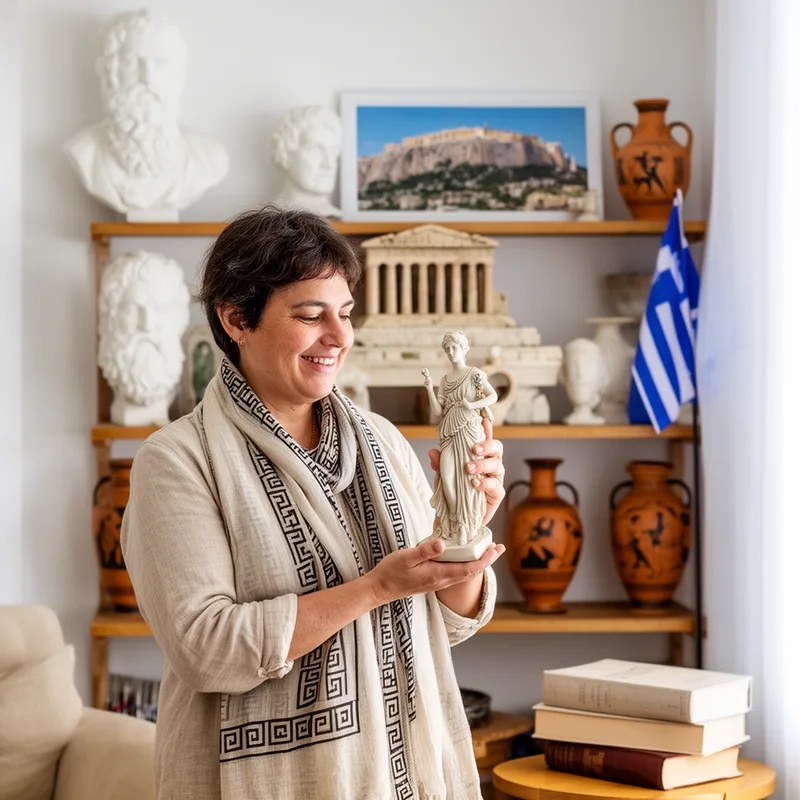
As a lifelong philhellenist, she decorated her home with statues inspired by ancient Athens.
-
The philhellenist society meets monthly to discuss the influence of Greek art and philosophy.
-
He is a dedicated philhellenist.
-
Many philhellenists admire ancient Greek philosophy.
-
As a lifelong philhellenist, she decorated her home with statues inspired by ancient Athens.
-
Lord Byron was a noted philhellenist who supported Greek independence in the 19th century.
-
The philhellenist society meets monthly to discuss the influence of Greek art and philosophy.
Synonyms

A person who studies ancient Greek language, literature, and culture

A person who admires Greece, its people, and its culture

A person who admires Greek people, culture, or language
How Admiring


Surface Forms
Morphology
philhellenist = philhellene (semi-transparent) = phil + hellen + ist
The suffix '-ist' indicates a person who practices or is concerned with something, but the specific cultural admiration aspect might not be immediately clear.
Etymology
Philhellenist comes from Greek parts phil- 'love' (the same phil- in philosophy) and Hellen- 'Greece'. So a philhellenist is someone who 'loves' Greek people, history, or culture, especially ancient Greece.