
phenylephrine
 1
8.3
1
8.3

- noun
- /ˌfɛnəˈlɛfɹɪn/
- Specialized
- The doctor recommended using phenylephrine to relieve my nasal congestion during allergy season.
Examples
-
Phenylephrine is often found in over-the-counter medications for treating stuffy noses.
-
After taking a decongestant with phenylephrine, I noticed my breathing improved significantly.
-
Now DayQuil contains phenylephrine, which doesn't do diddly-squat for the symptoms it's supposed to treat.
Blog text (10) -
Phenylephrine Neo-Synephrine Nasal
Academic text (2007) -
With the spray technique, the nose is topicalized in the standard fashion for nasolaryngoscopy with lidocaine and phenylephrine sprays.
Academic text (2004) -
The patient is then administered decongestion therapy with 0.25% phenylephrine HCl, and all examinations and manipulations are repeated and scored.
Academic text (2002) -
Because the tissue is vascular and bleeds easily, we may need to cauterize the tissue again with silver nitrate or control bleeding with phenylephrine applied to a small cotton ball.
Academic text (2003) -
After the removal of the packing system, cleaning is periodically accomplished in the office with phenylephrine (Neo-Synephrine) irrigation and instrument hygiene facilitated by endoscopy.
Academic text (1994)
Surface Forms
Morphology
phenylephrine = epinephrine (opaque) = phenyl + epinephrine
Although morphologically formed by adding the chemical combining form 'phenyl' to 'epinephrine', the name is a specialized chemical/medical term and its pharmacological meaning is not inferable by average learners.
Etymology
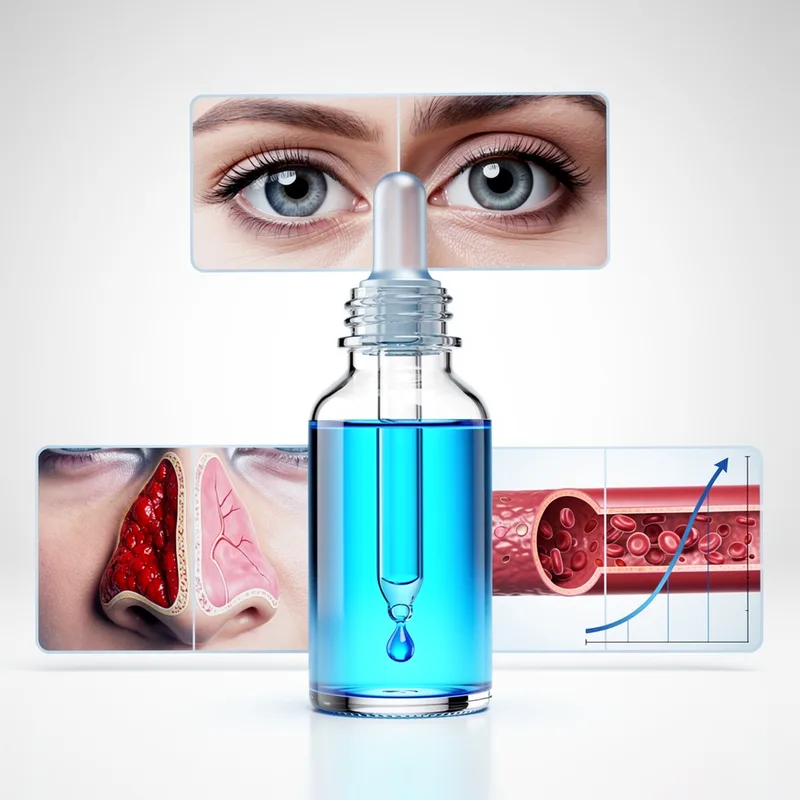
Phenylephrine comes from two parts: phenyl, a name for a simple chemical 'ring' often found in medicines, and ephrine, which links it to epinephrine ('adrenaline'). So it's a man-made drug that works like adrenaline to make blood vessels smaller, which explains why doctors use it to raise blood pressure, make pupils larger, or clear a blocked nose.