
pharmacokinetic
 1
7.7

- adjective
- /ˌfɑːrməˌkəʊnɪˈtɪk/
- Specialized
- So how do tiotropium's pharmacokinetic and pharmacodynamic characteristics translate into addressing these clinical goals?
- pharmacokinetic properties
Examples
-
Diseases play an important role in the pharmacokinetic variability of drugs in patients.
Academic text (2016) -
An important pharmacokinetic consideration for any antiviral agent is its distribution in the body.
Academic text (2000) -
The same authors performed pharmacokinetic testing of the interaction in this patient.
Academic text (2016) -
This same consideration would be appropriate for agents under development once their pharmacokinetic characteristics are known.
Academic text (2016) -
Unique to this antibiotic class is a different pharmacokinetic profile.
Academic text (1995) -
Two pharmacokinetic studies have documented the interaction of colesevelam and LT4.
Academic text (2016) -
Also, this study discusses the impact of other factors, such as formulation and time of administration, on the pharmacokinetic profile of levothyroxine.
Academic text (2016) -
From 2013 to 2017 (in the last five years), oral LT4 formulations have rapidly gained attention because of their pharmacokinetic properties.
Academic text (2016) -
In addition, most LAMAs achieve a steady pharmacokinetic state after 1 week, while the onset of action and the time taken to achieve full bronchodilator effect after the first dose have been shown to vary between agents.
Academic text (2017) -
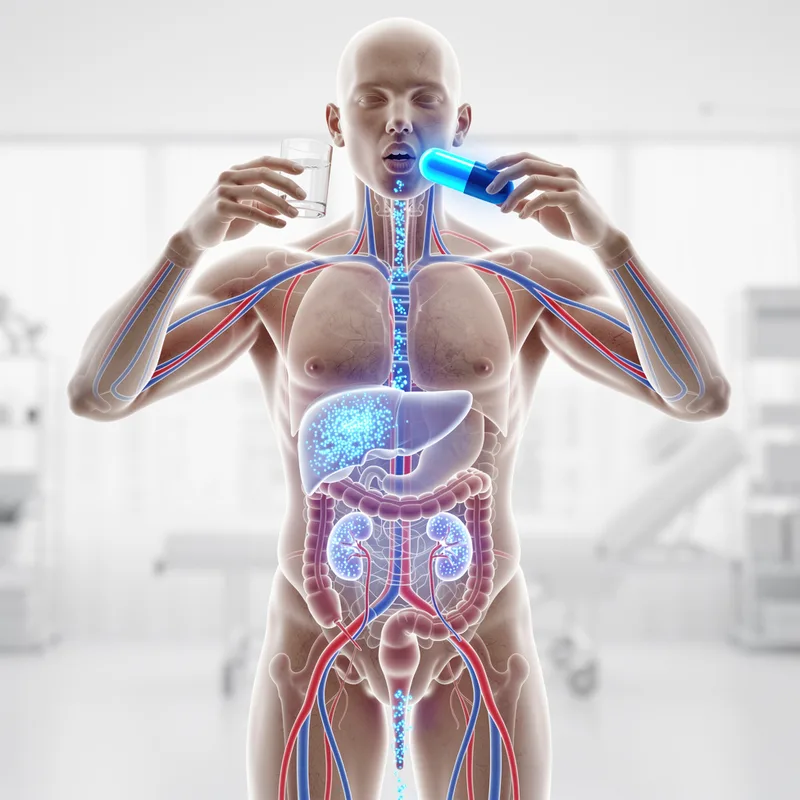
Studies reveal how pharmacokinetic properties affect how medications are absorbed and expelled by the body.
Surface Forms
Morphology
Etymology
Pharmacokinetic is made of two Greek parts: pharmaco- from pharmakon meaning 'drug' and -kinetic from kinesis meaning 'movement', the first is the same root as pharmacy and the second is like kinetic energy. So pharmacokinetic describes how a drug 'moves' through the body, how it is absorbed, changed, and removed.