
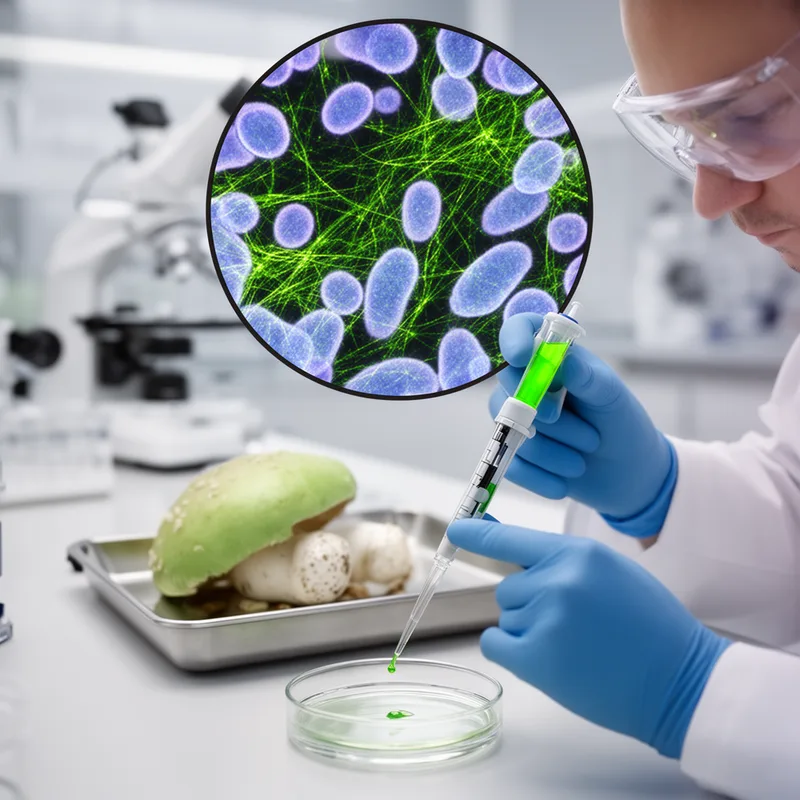
phalloidin


 1
9.9
- noun
- /fəˈloʊɪdɪn/
- Specialized
- The cochleae were analyzed for missing hair cells using phalloidin-stained surface preparations.
- rhodamine-conjugated phalloidin
Examples
-
During the experiment, they treated the tissues with phalloidin to observe its effects on cell structure.
-
Rhodamine-phalloidin staining was used.
Academic text (2008) -
Dispersion was recorded by time-lapse microscopy. Immunostaining and phalloidin staining.
Academic text (2018) -
The Fluorescein isothiocyanate (FITC)-conjugated phalloidin (1:1,000) was added to the cells at 4 degrees C overnight.
Academic text (2018) -
NMJ changes were decorated with fluorescein isothiocyanate-labeled a-bungarotoxin (Invitrogen) and phalloidin as a control using the manufacturer's recommended protocol.
Academic text (2011) -
Researchers used phalloidin to visualize actin filaments in the cell samples.
-
The scientist explained that phalloidin could be used to stain specific proteins in biological experiments.
Surface Forms
Etymology
Phalloidin comes from the mushroom name Amanita phalloides; the part phallo- is from Greek phallos meaning 'phallus', -oid means 'like', and -in marks a protein, so the name points to a protein from that 'phallus-like' mushroom and explains why phalloidin is the toxic peptide found in the death cap.