
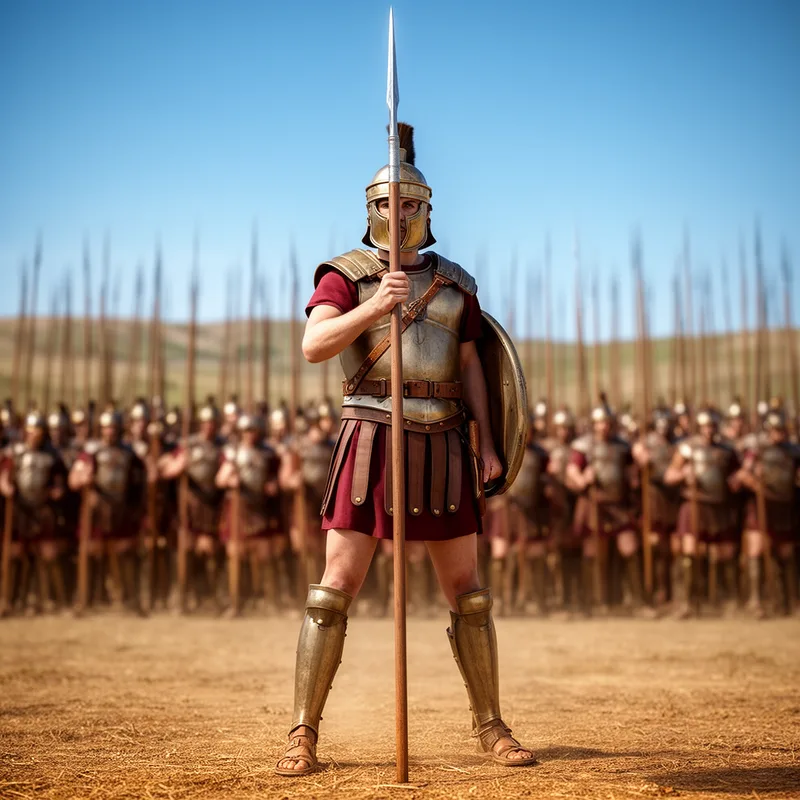
phalangite


 1
9.9
- noun
- /fəˈlænˌɡaɪt/
- In battle, the phalangites formed a strong defensive wall.
Examples
-
The phalangite stood bravely at the front line.
-
A single phalangite could hold his ground against several opponents thanks to his training.
-
The phalangite stood in formation, his long spear pointed toward the enemy lines.
-
Alexander the Great relied on the discipline of each phalangite during his campaigns.
-
A skilled phalangite stood ready with his long spear during the battle.
-
As a phalangite, he trained extensively in the use of his weapon and formations.
-
The tactics of the ancient phalangite unit were crucial for winning many engagements.
Synonyms
 1
7.6
A person who fights with a long pointed pole
 1
9.9
A soldier from long ago who carried a long spear to fight
 1
9.1
A heavily armed foot soldier from ancient Greece who fought with a shield and spear
Surface Forms
Morphology
phalangite = phalanx (semi-transparent) = phalang + ite
The suffix '-ite' clearly marks membership, but the root appears as the combining form 'phalang-' rather than the standalone 'phalanx', and 'phalanx' is a relatively specialized term.
Etymology
Phalangite comes from the Greek root phalanx, which means 'a line or body of soldiers', and the ending -ite, which means 'a person belonging to'. So a phalangite is a soldier who belongs to a phalanx and fights in a tight line, usually with a long spear.