
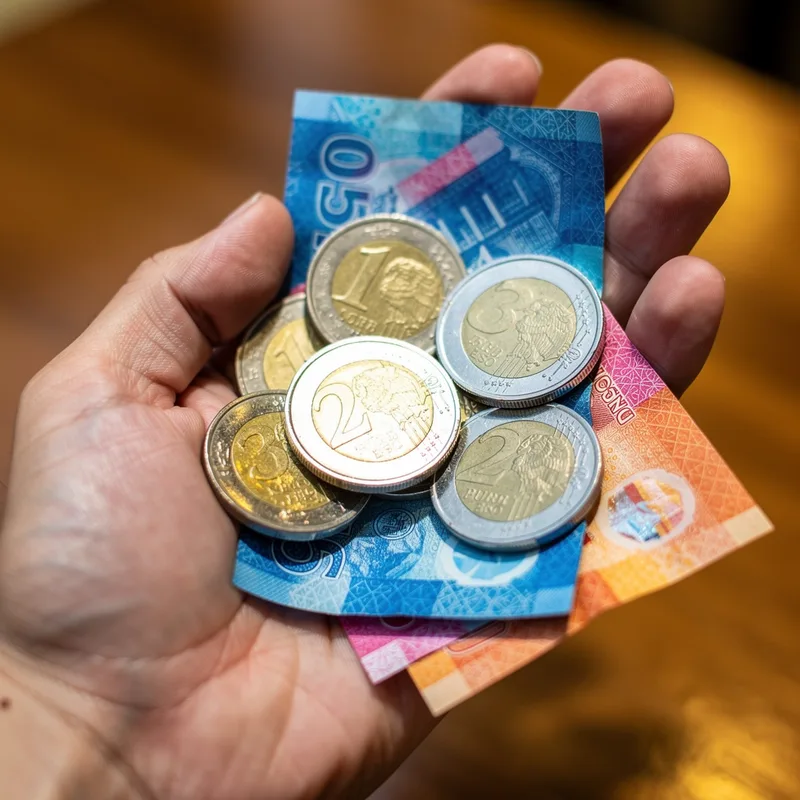
peso
 17
1.6
17
1.6

- noun
- /ˈpeɪsoʊ/
- Hey, mister, shine your shoes for one peso.
- Mexican peso
- peso/dollar
- peso devaluation
Loading YouTube…
Watch on YouTubeLet's let the peso collapse to its true value.
- Let's let the peso collapse to its true value.
- Kill the peso and move to the dollar.
- You can look after it's public information and the peso strengthens versus the real.
- You fill in the middle and then move over to the other Fiat, Mexican peso in my example.
- So, you know, today a rich Mexican, he is not saving his money in pesos.
- Lot of dollars, lot of dirty narco dollars getting exchanged for pesos.
- Convert the dollars to pesos you need you need a company that's printing the pesos.
- But traders continue to sell the peso on fears of radical constitutional change after voters handed a huge mandate to the president-elect.
- So the yen, the rupee, the dollar, the peso, all fake.
- If you're if you're in Argentine pesos pesos,
- And because everybody is trained to hold dollars and pesos and yuan and all of that.
Examples
-
I was down to my last peso.
-
Mexico's peso did fall by more than ten percent in the month after Russia's debacle.
Academic text (1999) -
Wish I had a peso for every time I heard that old line.
-
There was a time when the peso was worth something.
Fiction book (1995) -
The lieutenant took out the peso to show her.
Fiction book (1996) -
Even before the peso fell, growth averaged only 3.1 percent in Latin America as a whole.
Academic text (1996) -
The appreciation of the peso especially hurt small and medium-sized businesses that lacked access to international capital markets.
Academic text (1999) -
I was down to my last peso.
-
The devaluation of the peso has meant their money buys less than it once did.
-
So Rue made her choice and took a fifty-peso note from her skirt pocket.
Compounds






Surface Forms
Etymology
Peso originally meant 'weight' in Spanish and comes from an old Latin root pendere meaning 'to weigh'. Because coins were once valued by their weight of silver, peso became the name for the money, like the English word pound which also began as a weight.