
peroxyl
- noun
- /pəˈrɒksɪl/
- Specialized
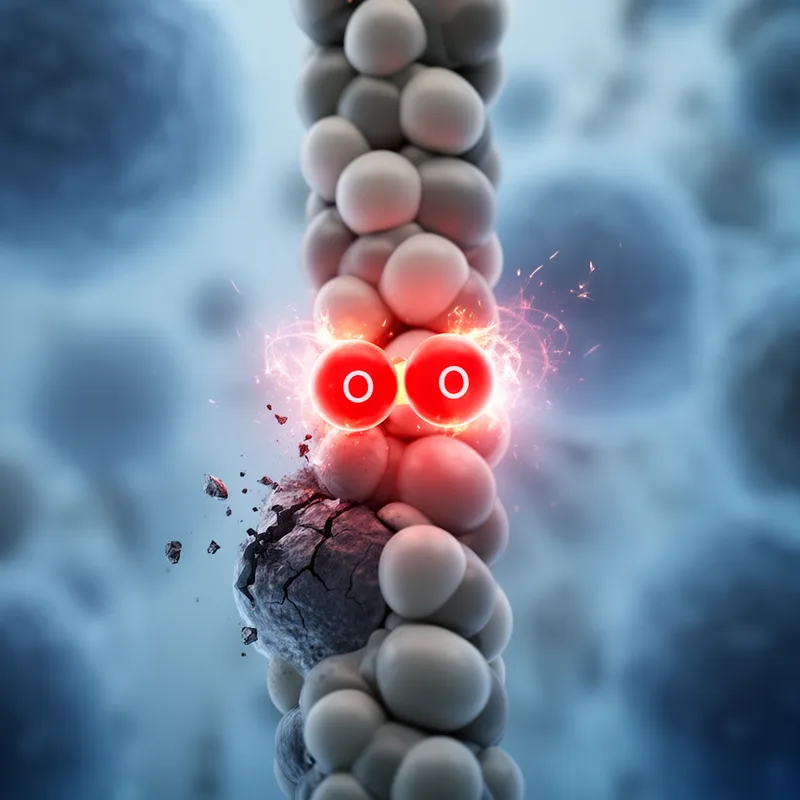
- The peroxyl radical is an oxidizing agent akin to the type our cells generate day in and day out during ordinary metabolism, says Cao, who is a chemist and medical doctor.
- peroxyl radical
Examples
-
Researchers have found that the peroxyl radical can damage cells if not properly managed.
-
The peroxyl radical plays a crucial role in many oxidation reactions in the body.
-
In the laboratory, scientists often study the behavior of the peroxyl radical to understand its effects on chemical processes.
Surface Forms
Morphology
peroxyl = peroxide (semi-transparent) = perox + yl
Formed from the chemical combining form 'perox-' plus the radical-forming suffix '-yl'; the structure follows systematic chemical naming but requires specialized chemical knowledge to interpret.
Etymology
Peroxyl comes from peroxide (a chemical with two oxygen atoms) plus the ending -yl that names a small group or part. So a peroxyl is a small, very reactive group containing two oxygen atoms, which is why it often takes part in oxidation and can cause cell damage.

