
permafrost
 14
7.7

- noun
- /ˈpɜrməˌfrɔst/
- Specialized
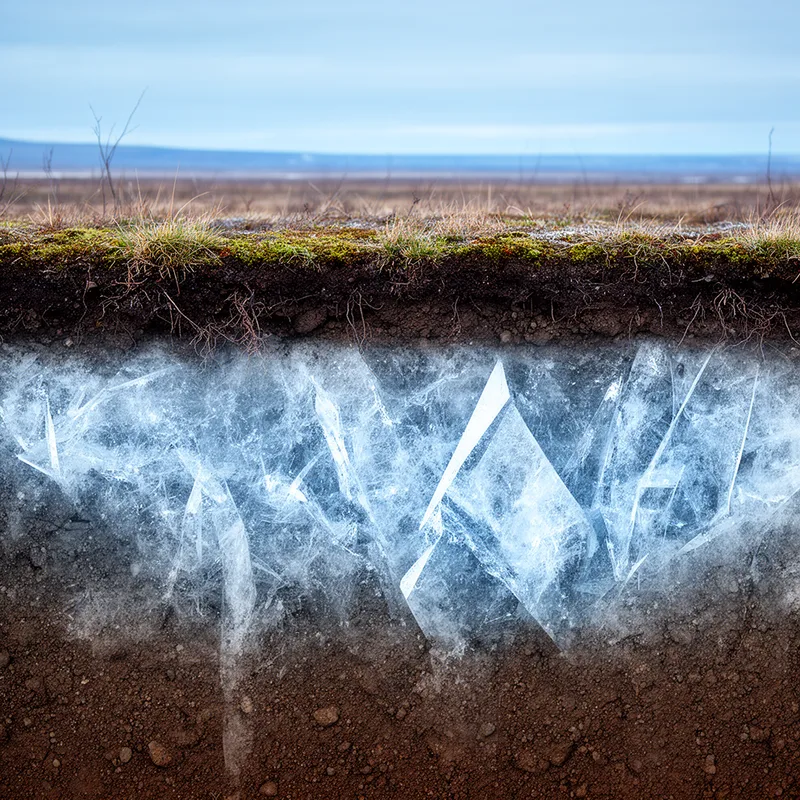
- A layer of permafrost under the surface keeps the ground frozen throughout the year in polar regions.
- layer of permafrost
- thawing permafrost
- permafrost region
Loading YouTube…
Watch on YouTubeSo it's not just the ice caps, the permafrost in the north as well.
- So it's not just the ice caps, the permafrost in the north as well.
- For instance, all that methane that's coming out of the ocean floor that was sequestered because of the permafrost which is now melting.
- On his land, there's a a valley that's filled with with permafrost.
Examples
-
Rising sea levels, melting ice, deteriorating permafrost, and increasingly violent storms were rendering their village uninhabitable.
Academic text (2006) -
With the polar ice caps and the permafrost continuing to melt, there'll be more flooding in the coastal cities, more unstable foundations for roads, buildings... and for pipelines.
-
So it's not just the ice caps, the permafrost in the north as well.
-
Everyone that deals with permafrost always has to talk about carbon.
-
In other words, the complex is standing on a permafrost plug.
Academic text (2010) -
Although I had never come across permafrost before on an excavation, it is easy to recognize.
Academic text (2010) -
In the far north, even below the permafrost zone, trees root very shallowly but broadly.
Blog text (5) -
As hard as the permafrost is, the lake's water has a warming effect, meaning that the permafrost is periodically thawing.
Academic text (2010) -
Once it has melted, permafrost may release large amounts of mercury hidden in frozen soils and plants.
Academic text (2012) -
The bodies of their chieftains, found frozen in the Siberian permafrost, display a dazzling array of designs, from rearing stallions to fantastic beasts.
Surface Forms
Morphology
Etymology
The word permafrost is made from perma-, from 'permanent' meaning 'lasting', and frost, meaning 'frozen'. It echoes the Russian idea of 'eternal frost' and describes ground that stays frozen all year.