
perlite
 1
7.5

- noun
- /ˈpɜrlaɪt/
- Specialized
- Vegetable transplant producers use large quantities of growing media, consisting primarily of peat moss, perlite, and vermiculite.
- peat and perlite
Loading YouTube…
Watch on YouTubeBut you can see, or maybe you can't, but it's a cactus and succulent mix, so there's larger chunks of perlite in it like this.
- But you can see, or maybe you can't, but it's a cactus and succulent mix, so there's larger chunks of perlite in it like this.
- Hopefully we've mixed our soil, which again is peat Moss, compost, some worm casting, some perlite, so more or less a classic potting soil mix.
Examples
-
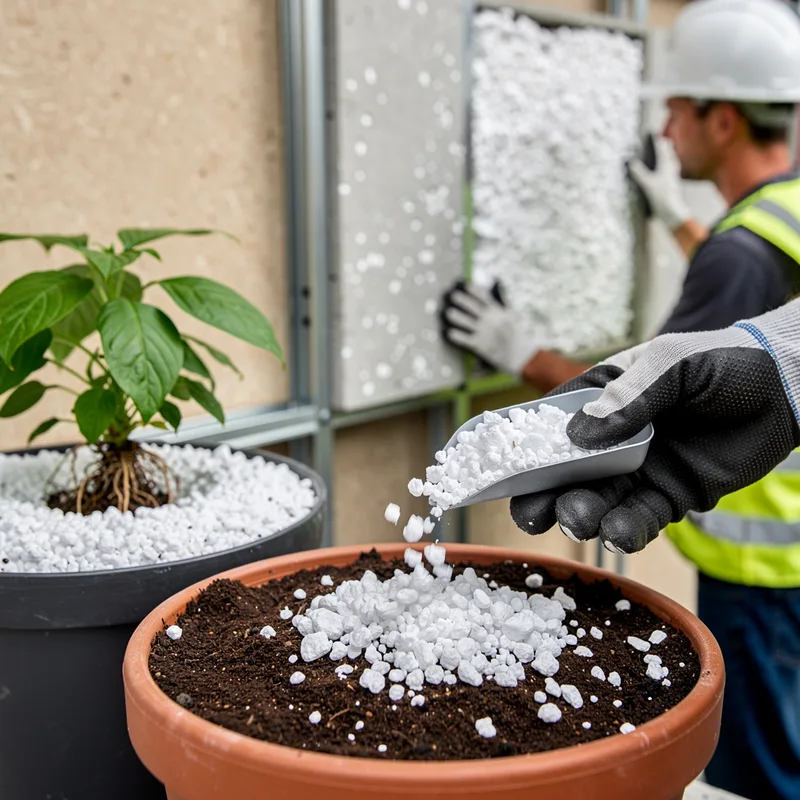
Using perlite in the potting mix helps prevent the soil from compacting and improves drainage.
-
Many gardeners choose to mix perlite into their soil to enhance aeration and support healthier plant growth.
-
As you can see, the perlite does show through once it's watered.
-
And so one thing that I like to do is I like to add back in a little bit of perlite just to increase that aeration in the soil.
-
Perlite works particularly well in wick systems because of its water-absorption properties.
Academic text (2009) -
Perlite is expanded volcanic glass, which is accomplished through a heating procedure intended to form lightweight particles.
Academic text (2009) -
Seeds, particularly ones that are too large to stick to wet paper towels, can also be germinated in perlite, which is easily removed from roots prior to transplanting into solution.
Academic text (2001) -
The non-amended media was the grower's proprietary mix of peat moss, perlite, and vermiculite without starter fertilizer.
Academic text (2001) -
I have been experimenting with organic gardening for the past few years and have resigned myself to a raised bed system filled with 50% good topsoil, 25% compost, and 25% drainage medium, be it sand or perlite or whatever you can affordably get your hands on.
Blog text (6) -
When starting seeds, add some perlite to the soil to create a lightweight and well-draining environment.
Surface Forms
Etymology
Perlite gets its name from the idea of a pearl, because when this volcanic rock is heated it expands into small, light, white pieces that look a little like 'pearls'. That's why perlite is a very light, porous material used to make soil lighter and to help with insulation in buildings.